
Sciatica, Hip Pain, or Low Back Arthritis? Here's How to Tell the Difference — and What to Do About It
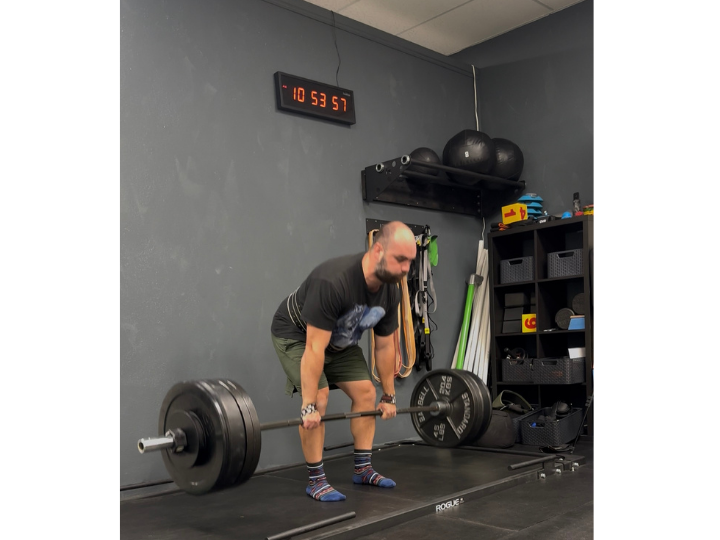
If you train hard — powerlifting, CrossFit, strongman, Highland Games — “my back hurts” isn’t specific enough to act on. Low back pain, hip-related pain, and sciatica can all show up after a heavy squat session or a hard training block, and they can all feel similar at first. But they come from different structures, respond to different treatments, and need to be trained around differently.
Guessing wrong here is how athletes end up doing months of the wrong exercises, resting when they should be loading, or loading when they should be backing off.
Below is how we tell them apart, and how we treat sciatica specifically once we’ve confirmed that’s what’s going on.
The Three Most Common Culprits Behind "Low Back Pain"
| Sciatica | Hip-Related Pain | Low Back Arthritis (Facet/DJD) | |
|---|---|---|---|
| Where it's felt | Radiates from low back/glute down the leg, often past the knee | Groin, front of hip, side of hip, sometimes referred to the knee | Localized low back, often one or both sides of the spine, doesn't usually travel far |
| Pain quality | Sharp, electric, burning, shooting; may include numbness/tingling | Deep, achy, pinching, especially with hip flexion (squat depth, sitting low) | Dull, stiff ache; sharper with extension (standing up from bent-over position, overhead work) |
| What makes it worse | Sitting, forward bending, coughing/sneezing, loaded hip hinge | Deep squatting, pistol squats, hip flexor-heavy movement, prolonged sitting | Standing long periods, back extension, waking up stiff |
| What eases it | Walking, lying down, changing position | Varies — often unloading the hip | Movement/warming up, worse with rest then better once moving |
| Underlying issue | Nerve root irritation/compression (usually disc, sometimes piriformis) | Joint (labrum, FAI), muscular (flexors, adductors), or referred from low back | Degenerative changes in the facet joints of the spine |
| Who it hits most | Athletes with heavy axial loading — deadlift, squat, strongman carries | Athletes with high hip ROM demands — Olympic lifters, CrossFit, dancers-turned-lifters | Older or long-tenured athletes with years of loaded spine work |
This is the exact framework we use in the first visit — because treating hip pain like it’s sciatica (or vice versa) is one of the most common reasons athletes don’t get better with generic “back pain” care.
Sciatica: A Closer Look
What Causes it?
Sciatica isn’t a diagnosis on its own — it’s a symptom pattern caused by irritation or compression of the sciatic nerve or its nerve roots, most commonly from:
- A disc bulge or herniation pressing on a nerve root (most common in lifters — think loaded flexion or a rounded-back pull)
- Piriformis muscle tightness/spasm compressing the nerve as it passes through the glute
- Spinal stenosis narrowing the space the nerve exits through (more common in older or long-training-history athletes)
Who Gets It
In our patient population specifically, sciatica shows up most in:
- Powerlifters and strongman competitors — repeated heavy axial loading through the spine, especially deadlift and loaded carries
- CrossFit athletes — high volume of loaded flexion/extension (think high-rep deadlifts, cleans under fatigue)
- Highland Games competitors — explosive rotational and loaded throwing patterns that stress the disc and nerve roots
- Athletes who’ve had a rapid jump in training volume or load without adequate recovery capacity

Woman doing rehab exercise

Powerlifter performing bench press
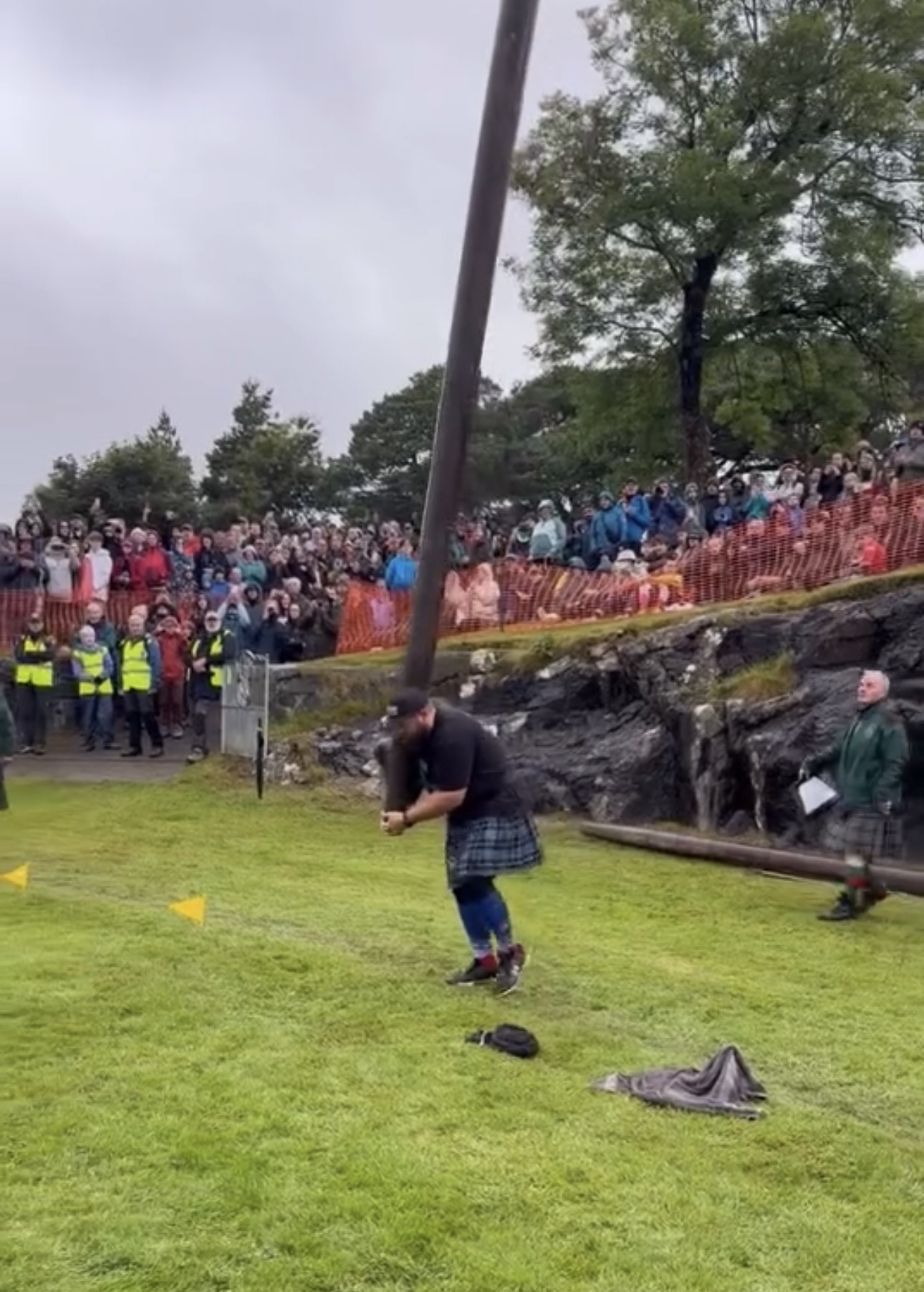
Highland Games athlete during competition
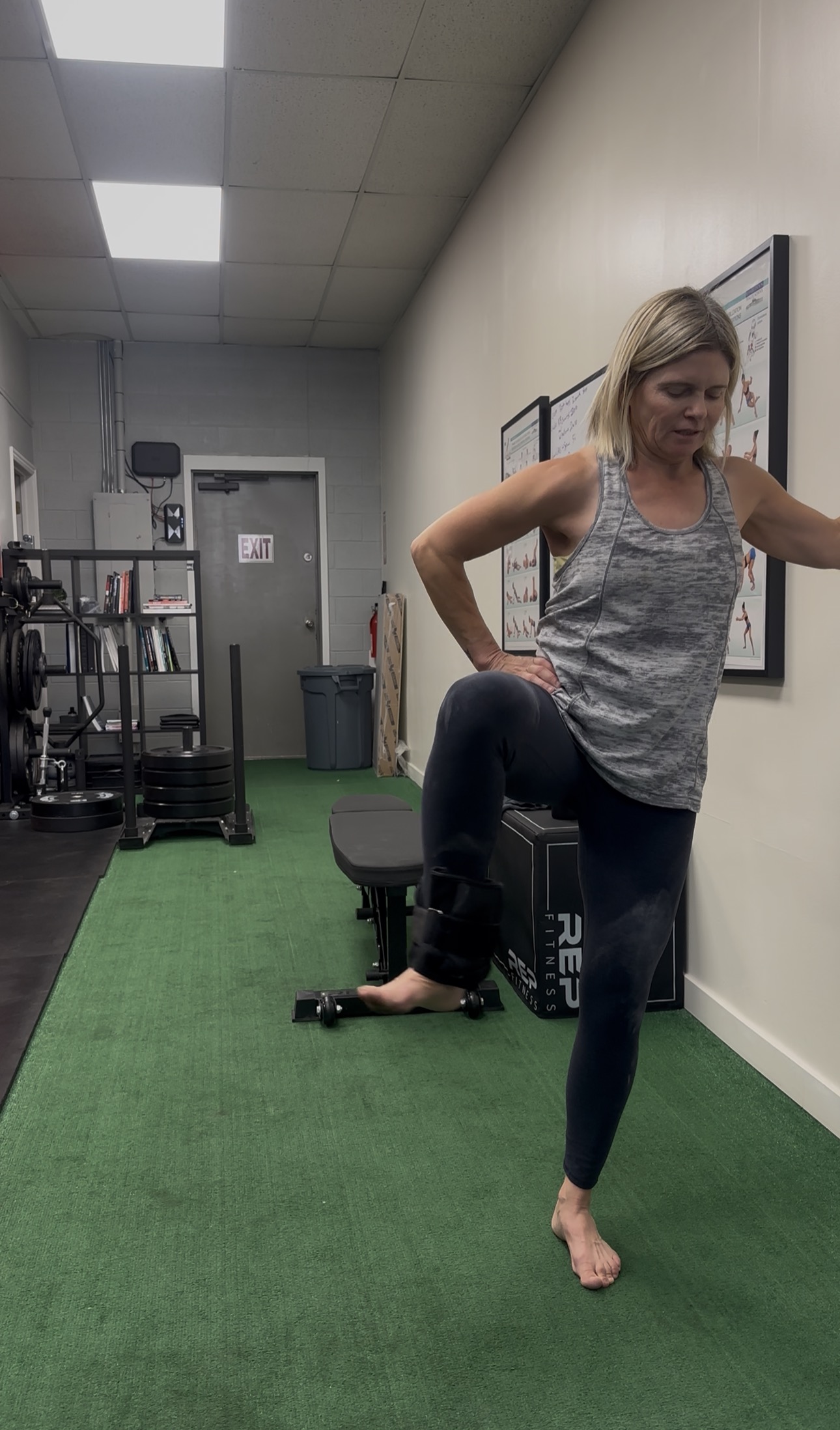
Woman performing joint training
How It Wrecks Everyday Life (Not Just Training)
This is the part that gets underestimated. Sciatica isn’t just “can’t deadlift right now.” Patients tell us it affects:
- Sitting through a workday, a car ride, or a meal
- Sleep — can’t find a position that doesn’t shoot pain down the leg
- Basic movement — putting on shoes, getting out of a car, picking something off the floor
- Mental state — the unpredictability of when it’ll flare makes people anxious about moving at all, which often makes it worse
How We Diagnose It at ChiroMovement
We don’t guess based on where you point. Every new low back patient goes through orthopedic testing to confirm which of the three patterns (or combination) is driving the pain:
- Straight Leg Raise (SLR) & Slump Test — reproduces nerve tension to confirm/rule out a neural cause
- Braggard’s & Bowstring Test — narrows down whether it’s truly nerve root involvement
- Femoral Nerve Stretch Test — checks upper lumbar nerve root involvement (rules out sciatica-mimics)
- FABER/FADIR Test — isolates hip joint pathology (labrum/FAI) from spine-driven pain
- Lumbar extension/quadrant testing — provokes facet-driven pain to confirm arthritic/degenerative involvement
- Dermatome, myotome, and reflex testing — maps exactly which nerve level is involved and whether there’s any motor weakness that needs closer monitoring
This is what separates “generic back pain treatment” from a plan built for what’s actually happening in your spine.
Treatment: Abolish, Then Maintain
We run this in three phases, and we tell patients up front which phase they’re in so there are no surprises.
Phase 1 — Abolishment (Calm It Down)
Goal: get you out of nerve irritation and back to tolerable movement as fast as possible.
- Manual adjustment/mobilization to reduce mechanical pressure on the nerve root
- Focused shockwave therapy (Precision Pulse FX) for irritated soft tissue and nerve pathways contributing to symptoms
- Nerve flossing/glide techniques to reduce adhesion and improve nerve mobility
- Directional preference loading (McKenzie-style) — used deliberately, not generically, based on which direction actually centralizes your symptoms
- Load modification guidance specific to your sport — what to pull back on and what you can keep training through

Phase 2 — Maintenance & Return to Full Load
Goal: get you back to competing/training at full capacity, and keep this from becoming a recurring issue.
- Progressive reloading of the spine specific to your lifts (not generic core work — actual pattern retraining for your squat/pull/carry mechanics)
- Hip and glute capacity work to offload the spine long-term
- Periodic check-ins tied to your training blocks (pre-meet, post-heavy-block) rather than open-ended ongoing visits
- Home program built around maintaining the gains, not creating dependency on the clinic

Phase 3 — Build (Bulletproof the System)
Goal: this isn’t just “don’t hurt anymore” — it’s building a low back and hip that can actually take the loads your sport demands, so this doesn’t come back six months into your next training block.
- Breathing & bracing mechanics — most athletes are bracing wrong under load without knowing it. We retrain 360-degree intra-abdominal pressure (diaphragm down, brace out, not just “sucking in”) so your spine is protected before load ever hits it, not compensating for a leak in the system
- Torso strength built off that brace — anti-extension, anti-rotation, and anti-lateral flexion work (think dead bugs progressed to loaded carries, Pallof presses, suitcase holds) layered on top of correct bracing, not before it
- Hip mobility progressed into hip strength — mobility alone doesn’t transfer to a heavy lift. We take you through a deliberate sequence: open up the restricted range first (hip flexor/adductor/capsule work), then load that new range (think loaded 90/90s progressing to deep split squats, controlled articular rotations progressing to weighted hip work) so the mobility actually shows up under a bar, not just on a mat
- Sport-specific integration — tying the brace, torso strength, and hip capacity directly into your squat/pull/carry pattern under real load, not as isolated accessory work
- This phase is where we graduate most patients out of active care into periodic performance check-ins, since the goal is a spine and hip system that doesn’t need us anymore

Ready to Find Out What's Actually Going On?
If you’re dealing with pain that radiates down your leg, deep in your hip, or a stiff ache across your low back — don’t guess and don’t just rest and hope. Book an evaluation and we’ll run the testing to tell you exactly what you’re dealing with and what it’ll take to fix it.