
Shockwave Therapy
Getting you back to the activities you love!
Get stubborn pain to finally change using Shockwave Therapy
Shockwave therapy is a non-invasive treatment that uses acoustic pressure waves to stimulate a biological response in painful or slow-to-recover tissue. At ChiroMovement, we combine shockwave with one-on-one rehabilitation to help active adults reduce pain, rebuild capacity, and return to the activities they care about.
Personalized care in West Jordan, Utah. No referral required.

When rest, stretching, or temporary relief has not been enough
Many of the people we see have already tried resting, stretching, braces, injections, adjustments, or generic exercise programs. They may feel better briefly, but the pain returns as soon as they begin running, lifting, working, or being active again.
Our goal is not simply to quiet the painful area for a few days. We want to understand why it remains sensitive, use shockwave when it is appropriate, and build a plan that helps the area tolerate real life again.
I had already gone through 3 weeks of physical therapy elsewhere before going here, and within a week I could see improvement . I would highly recommend anyone to go here.
What is shockwave therapy?
Shockwave therapy—also called extracorporeal shockwave therapy—is a non-invasive treatment that delivers controlled acoustic waves through the skin and into a targeted area.
These pressure waves create a mechanical stimulus within the tissue. That stimulus may help influence pain, local circulation, and the cellular processes involved in tissue remodeling. Shockwave is most often considered for persistent musculoskeletal problems, particularly when a tendon or other soft tissue has not responded as expected to rest and conventional care.
There are no incisions and no injections. Treatment is performed in the office and is usually completed in a matter of minutes.
Shockwave is not a magic wand, and it does not replace movement or strength work. We use it to help create a better opportunity for recovery—then reinforce that opportunity with an individualized rehabilitation plan.
Conditions we may treat with shockwave
Shockwave therapy can be considered for a range of musculoskeletal conditions. Some of the most common include:
Foot and ankle
- Plantar fasciitis and persistent heel pain
- Achilles tendinopathy
- Other chronic foot and ankle tendon pain
Knee and hip
- Patellar tendinopathy, sometimes called jumper’s knee
- Quadriceps tendon pain
- Gluteal tendinopathy and greater trochanteric pain
- Selected cases of persistent muscle or tendon pain around the hip
Shoulder and elbow
- Rotator cuff tendinopathy
- Calcific rotator cuff tendinopathy
- Tennis elbow
- Golfer’s elbow
- Other persistent tendon-related shoulder or elbow pain
Lower leg and other musculoskeletal problems
- Persistent muscle and connective-tissue pain
- Selected overuse injuries
- Certain slow-to-recover musculoskeletal conditions following a full evaluation
Not every painful condition is a good fit for shockwave. The location of your pain alone does not determine whether it will help. We first assess the involved tissue, your symptoms, your health history, and the demands you need your body to handle.
Why has the pain not gone away?
Persistent pain is not always a sign that the tissue simply needs more rest.
Tendons, muscles, and other connective tissues adapt to the demands placed on them. When an area has been overloaded, underloaded for too long, or repeatedly exposed to more stress than it can currently tolerate, its capacity can fall behind the demands of daily life or exercise.
That is why pain can return when you resume running, lifting, walking, working, or playing with your kids—even after weeks of avoiding the activity.
Recovery often requires two things:
- An environment that supports symptom reduction and tissue recovery.
- A progressive plan that rebuilds strength and tolerance.
Shockwave may help with the first. Personalized rehabilitation is what connects that progress to the activities you want to regain.
How shockwave may help
Depending on the condition and the individual, shockwave may help:
- Reduce pain and sensitivity
- Stimulate a local biological response in the targeted tissue
- Support blood-flow and tissue-remodeling processes
- Improve tolerance for movement and rehabilitation
- Provide a non-invasive option for certain persistent conditions
Results vary, and improvement is not always immediate. Some people notice changes early, while others improve gradually over the course of treatment and progressive loading.
The goal is not just to make the tissue feel different on the treatment table. The goal is to help you do more outside the clinic.
How we use shockwave differently
Shockwave is part of the plan—not the entire plan
At ChiroMovement, we do not treat every painful area with the same protocol. Your care begins with a one-on-one assessment to identify what is painful, what you are currently able to do, and what physical demands matter most to you.
When shockwave is appropriate, we may combine it with:
- Progressive strength and tendon loading
- Mobility work based on your specific limitations
- Manual therapy or joint treatment when useful
- Activity and training modifications
- Education about pain, recovery, and load management
- A clear progression back to work, exercise, sport, or everyday activity
Shockwave can help influence the painful tissue. Rehabilitation teaches that tissue—and the rest of your body—to handle load again.
What treatment looks like
1. We evaluate the problem
We discuss how the pain began, what makes it better or worse, what you have already tried, and what you want to return to. We then assess movement, strength, sensitivity, and tissue tolerance.
2. We determine whether shockwave fits
Shockwave is recommended only when your presentation and health history make it a reasonable option. If another approach makes more sense, we will tell you.
3. We apply treatment to the targeted area
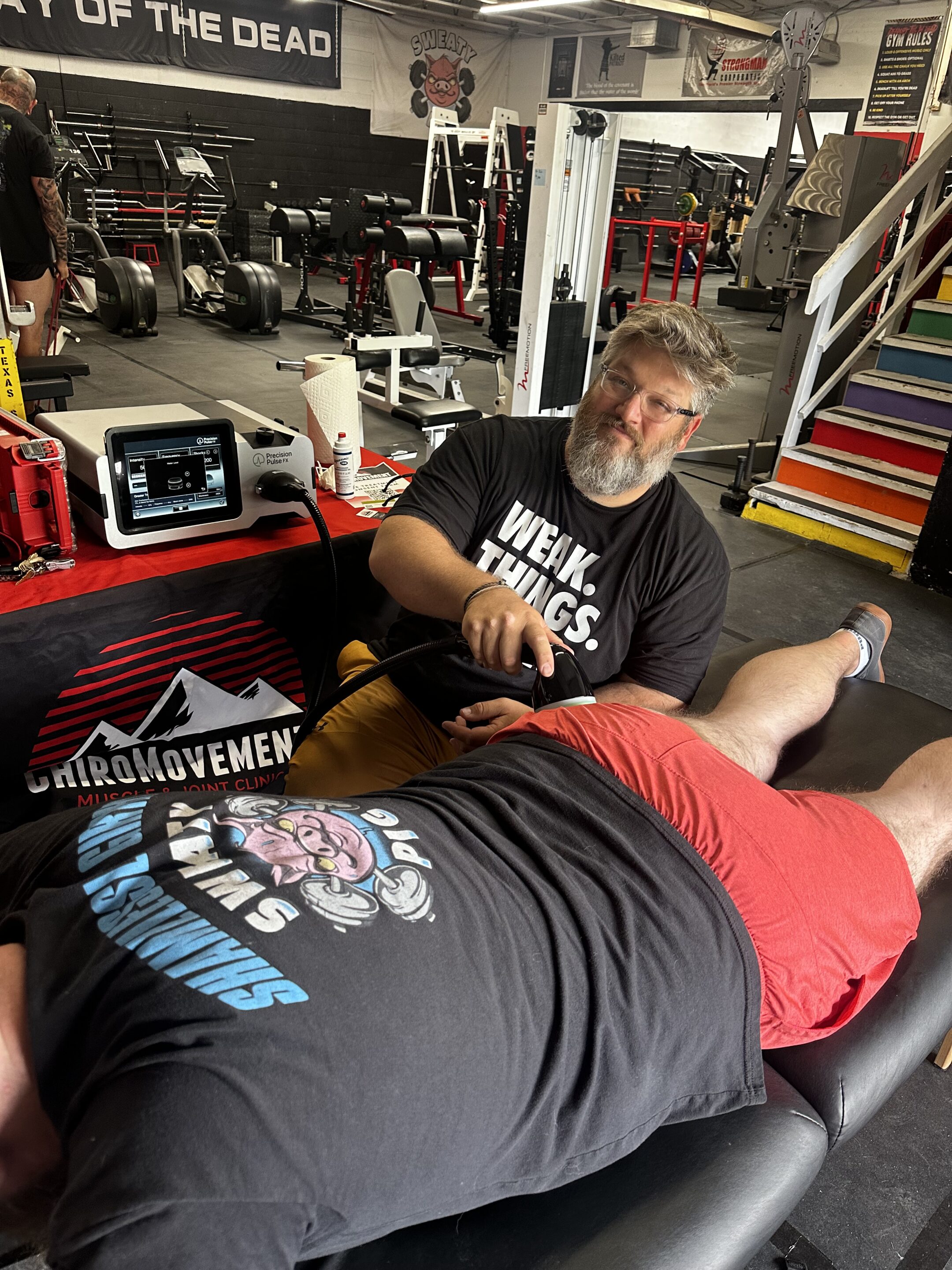
A handheld applicator delivers controlled acoustic waves through the skin. The intensity is adjusted to the treatment area and your tolerance. Treatment can feel uncomfortable, but it should remain manageable.
4. We build the area back up
You receive an individualized movement and loading plan designed around your current capacity and goals. We progress it as your symptoms and function improve.
5. We reassess what matters
We do not judge progress only by tenderness or a pain score. We look at whether you can walk farther, train harder, work longer, lift with confidence, or return to the activity that brought you in.
Is this you?
Shockwave therapy may be worth considering if:
- Your pain has lasted for several weeks or months
- The pain improves with rest but returns when activity resumes
- You feel stiff or sore when first getting up or starting to move
- You can warm up through the pain, only for it to return later
- Stretching, massage, adjustments, or other passive care has provided only temporary relief
- You have tried rehabilitation but your plan was too general or never progressed
- You want to remain active and are looking for an option beyond simply resting again
If several of these sound familiar, the next step is determining what is actually driving your symptoms and whether shockwave belongs in your plan.
Why ChiroMovement?

One-on-one care
You receive focused time with a provider who listens, evaluates, and adapts the plan to you.
More than temporary relief
We use hands-on care and technology when they can help, but we also address strength, mobility, load tolerance, and the demands of your daily life.
Built for active adults
Your goal may be returning to running, lifting, work, recreation, or simply keeping up with your family. Your care plan should reflect that goal.
Honest recommendations
Shockwave is useful for the right person and the right condition. If it is not a good fit, we will not force it into your care.
A plan you can understand
You should know what we are working on, why we are doing it, and what progress looks like.
Care designed to help you move forward
Dr. Steven Bird is a chiropractor at ChiroMovement in West Jordan, Utah. His approach goes beyond an “adjust-and-go” model by combining individualized assessment, manual treatment, progressive rehabilitation, and technologies such as shockwave therapy when appropriate.
The purpose of care is not to chase perfect alignment or keep you dependent on treatment. It is to help you build the movement options, strength, and physical capacity needed to return to the life you want to live.

Reviews


Frequently asked questions
Does shockwave therapy hurt?
Shockwave can feel uncomfortable, especially over a sensitive area, but the intensity can be adjusted. Most people are able to tolerate the brief treatment session. Some temporary soreness afterward can occur.
How many treatments will I need?
The number of visits depends on the condition, how long it has been present, your response to treatment, and what you need to return to. Many shockwave plans use a short series of sessions, but we will make a recommendation only after evaluating you.
How quickly will I notice results?
Some people notice an early change in pain or movement, while others improve more gradually over several weeks. Because recovery also depends on rebuilding tissue capacity, progress may continue as you work through your rehabilitation plan.
Can I exercise after shockwave therapy?
Often, yes—but the right amount and intensity depend on the condition. We will give you clear guidance about training, daily activity, and any temporary modifications.
Is shockwave the same as ultrasound therapy?
No. Although both treatments use forms of mechanical energy, shockwave therapy delivers distinct acoustic pressure waves and is used differently from traditional therapeutic ultrasound.
Is shockwave therapy the same as a TENS unit?
No. A TENS unit sends electrical stimulation through adhesive pads on the skin. Shockwave therapy delivers acoustic pressure waves through a handheld applicator into a targeted area.
Does shockwave break up scar tissue or calcium deposits?
That description is often oversimplified. Shockwave creates a mechanical and biological stimulus in the targeted tissue. In certain conditions—particularly calcific tendinopathy—treatment may be associated with changes in calcium deposits, but the goal is broader than mechanically “breaking up” tissue.
Is shockwave therapy safe?
Shockwave is non-invasive and is generally well tolerated when appropriately selected and applied. Temporary soreness, redness, or bruising can occur. It is not appropriate for everyone, which is why we review your health history and evaluate the area before recommending treatment.
Will shockwave fix the problem by itself?
Usually, that is not how we use it. Shockwave may reduce pain and support the recovery environment, but lasting improvement often requires progressive strengthening, appropriate loading, and a plan for returning to activity.
Do I need a referral?
No referral is required to schedule an assessment at ChiroMovement.
You have rested long enough. Let’s build a better way forward.
If stubborn heel, tendon, shoulder, elbow, hip, or knee pain is keeping you from the activities you care about, shockwave therapy may be one part of the solution.
Schedule a free pain assessment at ChiroMovement. We will listen to what is happening, assess the problem, and help you understand whether shockwave and one-on-one rehabilitation are appropriate for you.
ChiroMovement | West Jordan, Utah