
Hip Pain Treatment in West Jordan, Utah
Get back to squatting, deadlifting, and running without pain.
Hip pain that's holding back your training
Maybe it's a pinch at the bottom of every squat, a deep ache when you pull from the floor, or pain on the outside of your hip that keeps you up at night. Maybe it started with one bad rep, or maybe it crept in over a training block until it was there every session.
At ChiroMovement, we help lifters, CrossFit athletes, strongman and Highland Games competitors, runners, and active adults figure out what is actually driving their hip pain. Then we build a plan that calms it down and gets the hip strong enough to handle squats, deadlifts, sprints, and everyday life again.
Book Your AssessmentPersonalized care in West Jordan, Utah, serving South Jordan, Riverton, Herriman, Taylorsville, and the Salt Lake Valley. No referral required.
When stretching and foam rolling haven't fixed it
Hip pain is worth a closer look if:
- You feel a pinch in the front of the hip at the bottom of a squat or when you pull your knee to your chest
- The outside of your hip aches when you lie on that side, climb stairs, or stand on one leg
- Your groin hurts with sprinting, cutting, or wide-stance and sumo work
- You get deep buttock or sit-bone pain when deadlifting, sitting, or starting a run
- Your hip feels stiff getting out of the car or standing up after sitting
- It calms down with rest, then comes right back when you start training again
- Stretching, foam rolling, or massage helped for a day or two, but didn't last
If several of these sound familiar, the next step is finding out which structure is irritated: the joint, a tendon, a muscle, or something referring from your low back.
Common hip conditions we treat
Hip pain has a lot of possible sources. These are the ones we see most often in active adults and strength athletes.
Hip impingement (FAI) & pinching
A pinch or block in the front of the hip at the bottom of a squat, in deep flexion, or when the knee crosses the body. Usually very responsive to the right loading and positioning.
Read more →Hip labral irritation
Deep groin pain, sometimes with clicking, catching, or a feeling that the hip gives way. Many labral findings respond well to a progressive strength plan.
Gluteal tendinopathy (outer hip pain)
Pain on the outside of the hip that flares lying on that side, climbing stairs, or standing on one leg. Often called greater trochanteric pain or hip bursitis.
Shockwave therapy →Hip flexor strain & tendinopathy
Pain in the front of the hip with sprinting, high knees, kicking, or lifting the leg. Often feels "tight" when the real issue is irritation and weakness.
How we treat strains →Adductor (groin) strain
Pain in the inner thigh or groin with sprinting, cutting, sumo deadlifts, or wide-stance squats.
How we treat strains →Proximal hamstring tendinopathy
Deep sit-bone pain with deadlifts, RDLs, sprinting, or sitting for long periods. One of the conditions where focused shockwave can help.
Shockwave therapy →SI joint & low back referral
Pain in the buttock or back of the hip that may actually start in the low back or SI joint. Our guide explains how to tell sciatica, hip pain, and low back arthritis apart.
Read the guide →Deep gluteal & piriformis pain
Buttock pain that can travel down the back of the leg, often worse with sitting. It can mimic sciatica, so we screen for both.
Read more →Hip osteoarthritis
Stiffness and aching in the groin or front of the hip, especially after sitting or first thing in the morning. Strength training is one of the best tools for keeping you active.
Not sure which one fits? That's what the assessment is for. Hip pain can also be referred from the low back, so we screen for that too. If your back is part of the picture, see how we treat disc herniation and lumbar instability.
Why hasn't the hip pain gone away?
Most training-related hip pain isn't a sign that something is broken. It's a sign that the demand on the hip has gotten ahead of what the tissue can currently handle.
That can happen when volume or intensity jumps, you add a new movement like sumo deadlifts or sprints, your squat depth or stance changes, or recovery falls behind. The tendons, muscles, and joint structures around the hip adapt to load, but they adapt slowly.
Hips also get blamed on "tightness." Stretching a hip that feels tight can bring short-term relief, but if the real problem is an irritated tendon or a muscle that can't handle the load, the pain keeps coming back. Lasting change usually takes two things:
- Calming the irritated tissue enough that you can load it without a flare
- A progressive plan that rebuilds strength and tolerance until the hip can handle your training again
Want a head start? Read our article on building hips that are strong and resilient.
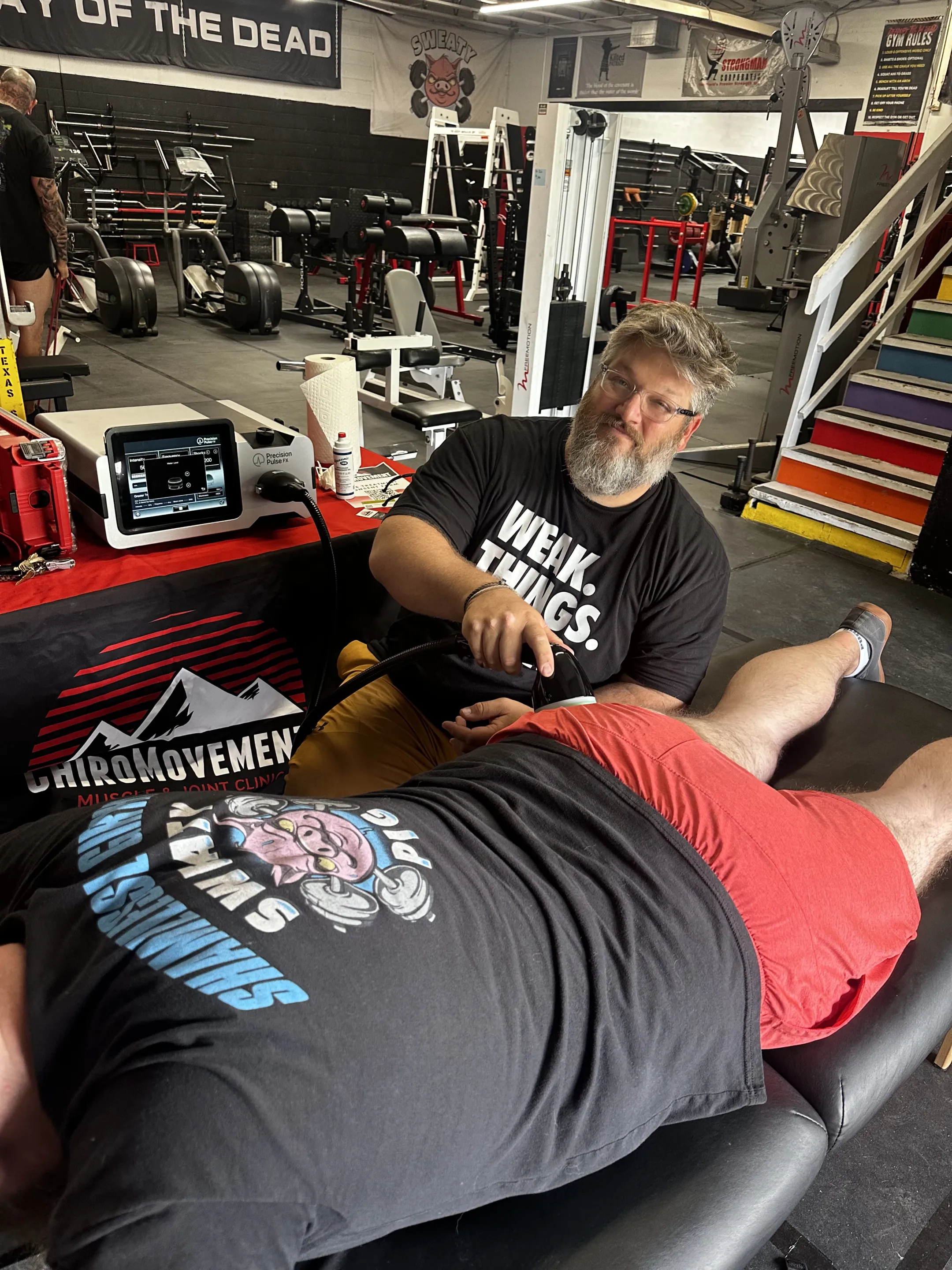
How we figure out what's going on
Your first visit is a full assessment, not a quick adjustment. We look at:
- Your history: when it started, what you were training, and which movements hurt
- Hip range of motion in every direction, including rotation side to side
- How you squat, hinge, lunge, and stand on one leg
- Strength testing of the glutes, hip flexors, adductors, and hamstrings, side to side
- Provocation tests to narrow down whether the joint, a tendon, or a muscle is irritated
- A low back and SI joint screen to rule out referred pain
- The lifts and positions that matter to you, so the plan fits your training
You'll leave knowing what we think is going on, what to modify in training right now, and what the plan looks like from here. If anything in the exam points to something that needs imaging or a medical referral, we'll tell you and help you get it.
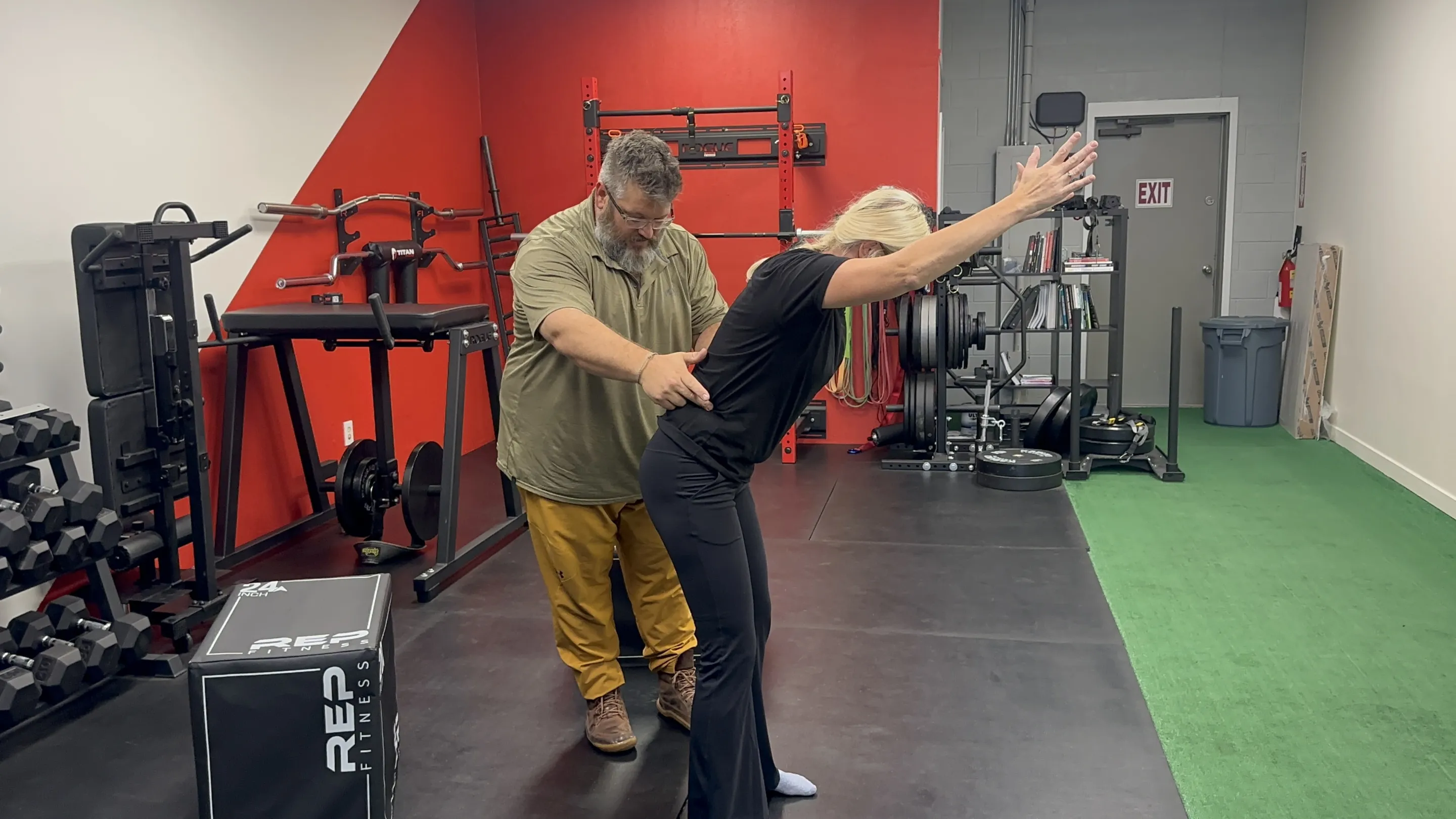
How we treat hip pain
Every plan is built around your assessment, but most follow the same general path: calm it down, build it back up, and get you back to full training.
Phase 1 — Calm it down
Goal: reduce pain and find what you can train right now.
- Training modifications, not total rest: adjusting stance width, depth, bar position, and exercise selection so you can keep lifting
- Hands-on care such as myofascial release and joint manipulation when it helps
- Dry needling for stubborn trigger points in the glutes, hip flexors, and adductors
- Focused shockwave therapy for gluteal and proximal hamstring tendinopathy
- Class IV laser therapy to help settle pain and irritation
- Early isometric and low-load exercise to start rebuilding without a flare
Phase 2 — Rebuild capacity
Goal: make the hip stronger than it was before it got hurt.
- Progressive glute, hip flexor, adductor, and hamstring strengthening through our functional rehab and strength training approach
- Blood flow restriction (BFR) training to build strength with lighter loads while the hip is still sensitive
- Restoring hip range and control with Functional Range Conditioning (FRC) mobility work
- Single-leg strength and control for squatting, running, and stairs
- Home program built around the equipment you actually have. For a head start, grab our free Fix Your Hip guide.
Phase 3 — Return to training
Goal: get back to your full program, including the lifts that used to hurt.
- Reintroducing squats, deadlifts, running, and sport-specific work with a clear progression
- Technique and setup changes, like stance, depth, and hip position, when they make a real difference
- Load management guidance for your training cycle or competition prep
Long term — Keep it that way
Once you're back to full training, we give you a short maintenance routine to keep your hips resilient, and a plan for what to do if they ever start talking to you again.
When to see a doctor first
- Hip or groin pain after a fall, especially if you can't put weight on the leg
- Numbness in the groin or inner thighs, or new bladder or bowel changes. Go to the emergency room.
- Sudden calf or thigh swelling, warmth, and pain
- Fever, redness, and heat around the joint
- Unexplained weight loss or night pain that never lets up
- A child or teen with a limp and hip, groin, or knee pain
Why lifters choose ChiroMovement for hip pain
We understand squats and deadlifts
We work with powerlifters, CrossFit athletes, strongman and Highland Games competitors every week. We know the difference between a hip that needs a break and one that needs a smarter program.
One-on-one care
You work directly with Dr. Steven Bird for the full visit, not a rotation of assistants.
Strength-first, not passive-only
Hands-on care and technology like shockwave and laser help settle pain. Progressive loading is what makes the change last.
A plan you can follow
You'll know what we're working on, why, and what progress looks like at each step.

Frequently Asked Questions
Should I stop squatting or deadlifting if my hip hurts?
Usually not completely. Most hip pain does better with modified training than with total rest. We'll show you how to adjust stance, depth, load, or exercise selection so you can keep training while the hip recovers.
Is my hip pain actually coming from my back?
It can be. The low back and SI joint can refer pain into the buttock, hip, and leg. That's why every hip assessment at ChiroMovement includes a low back screen, so we treat the actual source.
Do I need an MRI for hip pain?
Most people don't need imaging to start care. A thorough exam tells us a lot, and findings like labral tears and hip impingement shapes are common in people without pain. If your exam suggests something that needs imaging, we'll recommend it and help you get it.
What causes pain on the outside of my hip?
The most common cause is gluteal tendinopathy, an irritated tendon where the glutes attach to the outside of the hip. It often flares when lying on that side, climbing stairs, or standing on one leg, and it usually responds well to targeted strengthening, with shockwave as an option for stubborn cases.
Will stretching fix a tight hip flexor?
Not always. A hip flexor that feels tight is often irritated or weak rather than short. Stretching may feel good for a while, but strengthening the hip through its full range usually does more to make the change last.
Can you help with hip impingement or a labral tear?
Many people with hip impingement or labral findings improve with a structured rehab plan and smart training modifications. If your symptoms or exam suggest you need a surgical consultation, we'll tell you and help coordinate it.
How long does it take for hip pain to get better?
It depends on the condition, how long it has been going on, and what you need to return to. Many people feel a meaningful change in the first few weeks, while tendon problems often take a few months of progressive loading to fully resolve. We'll give you a realistic timeline after your assessment.
Do I need a referral?
No referral is required to schedule an assessment at ChiroMovement.
Your hips can handle more than they do right now
Let's find out what's driving the pain and build the plan that gets you back under the bar.
Book Your Assessment