
Neck Pain Treatment in West Jordan, Utah
Turn your head, sleep, and train without pain.
Neck pain that won't let you focus, sleep, or train
Maybe you woke up and couldn't turn your head. Maybe it's a constant ache from long days at a desk, headaches that start at the base of your skull, or a pinch that shows up every time you shrug, press overhead, or carry something heavy. Some people also get tingling or pain running down the arm.
At ChiroMovement, we help lifters, strength athletes, people with physical jobs, and desk workers figure out what is actually driving their neck pain. Then we build a plan that calms it down and makes your neck and upper back strong enough to handle work, training, and everyday life.
Book Your AssessmentPersonalized care in West Jordan, Utah, serving South Jordan, Riverton, Herriman, Taylorsville, and the Salt Lake Valley. No referral required.
When stretching and massage haven't fixed it
Neck pain is worth a closer look if:
- It hurts or feels stuck when you turn your head, look up, or look down
- You get headaches that start at the base of your skull or behind your eyes
- Your neck and upper traps feel tight no matter how much you stretch
- You feel tingling, numbness, or pain running into your shoulder blade, arm, or hand
- Shrugs, overhead pressing, carries, or bracing under a heavy bar make it worse
- It flares after long days at a desk, driving, or sleeping wrong
- Massage, stretching, or adjustments helped for a day or two, but didn't last
If several of these sound familiar, the next step is finding out which structure is irritated: a joint, a muscle, a disc, or a nerve.
Common neck conditions we treat
Neck pain has a lot of possible sources. These are the ones we see most often in active adults, strength athletes, and people who sit or work hard all day.
Mechanical neck pain & stiffness
Aching, stiffness, and limited motion from long hours at a desk, sleeping wrong, or a sudden jump in training. The most common type of neck pain we see.
Acute "wry neck" & facet irritation
Waking up unable to turn your head, often with sharp pain on one side. It usually settles quickly with the right care and gentle movement.
How adjustments help →Cervicogenic headaches
Headaches that start in the neck, often at the base of the skull, and get worse with certain positions or long periods of sitting.
Pinched nerve (cervical radiculopathy)
Pain, tingling, numbness, or weakness running into the shoulder blade, arm, or hand when a nerve in the neck is irritated.
Disc-related neck pain
Neck and arm pain linked to an irritated or herniated disc. Most people improve without surgery when the plan is right.
How we treat disc injuries →Upper trap & muscle tension
Tight, knotted upper traps and neck muscles that feel like they never let go, often worse with stress, desk work, or heavy pulling.
Dry needling →Neck pain from lifting
Pain with shrugs, deadlifts, overhead pressing, carries, or bracing under a heavy bar. Often a load and position problem we can fix.
Whiplash & neck strain
Neck pain and stiffness after a car accident, fall, or contact in sport. We screen carefully first, then rebuild motion and strength.
Thoracic outlet syndrome
Arm heaviness, tingling, or fatigue with overhead work, from irritation of the nerves and vessels between the neck and shoulder.
Read more →Not sure which one fits? That's what the assessment is for. Neck problems can also refer pain into the shoulder, so we look at both. If your shoulder is part of the picture, see how we treat shoulder pain.
Why hasn't the neck pain gone away?
Most neck pain isn't a sign that something is broken. It's usually a sign that the demand on your neck and upper back has gotten ahead of what those tissues can currently handle, whether that demand comes from heavy training, long hours in one position, poor sleep, or stress.
Stretching and massage can make a stiff neck feel better for a while. But if the deep neck muscles and the muscles around your shoulder blades can't support your head and arms through a long day or a hard session, the pain keeps coming back.
Lasting change usually takes two things:
- Calming the irritated joint, muscle, or nerve enough that you can move and load it without a flare
- A progressive plan that rebuilds strength and endurance in the neck and upper back so they can handle your work and training
How we figure out what's going on
Your first visit is a full assessment, not a quick adjustment. We look at:
- Your history: when it started, what you were doing, and which positions or movements hurt
- Neck range of motion in every direction, plus how your upper back and shoulder blades move
- A neurological screen: strength, reflexes, and sensation in the arms
- Provocation and nerve tests to narrow down whether a joint, muscle, disc, or nerve is involved
- A shoulder screen, since shoulder and neck pain often overlap
- Your work setup, sleep, and the lifts that matter to you, so the plan fits your life
You'll leave knowing what we think is going on, what to change right now, and what the plan looks like from here. If anything in the exam points to something that needs imaging or a medical referral, we'll tell you and help you get it.

How we treat neck pain
Every plan is built around your assessment, but most follow the same general path: calm it down, build it back up, and get you back to full work and training.
Phase 1 — Calm it down
Goal: reduce pain and restore comfortable motion.
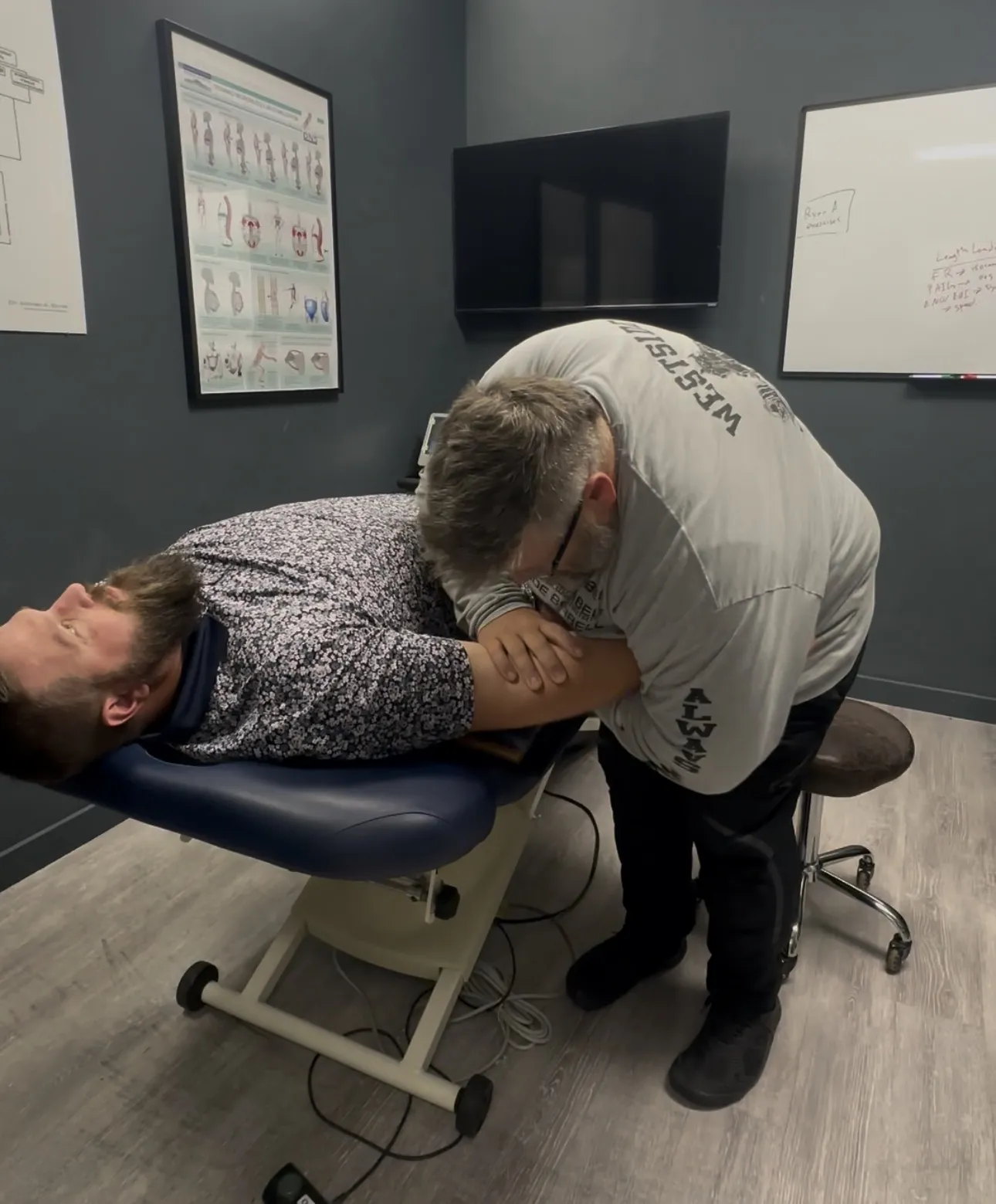
- Chiropractic adjustments and joint mobilization for the neck and upper back when they fit your exam
- Myofascial release for tight neck, upper trap, and shoulder blade muscles
- Dry needling for stubborn trigger points in the upper traps, levator scapulae, and neck muscles
- Class IV laser therapy to help settle pain and irritation
- Positions and modifications for work, sleep, and training so you're not re-irritating it every day
- Gentle range-of-motion and early strength work to keep the neck moving
Phase 2 — Rebuild capacity
Goal: make the neck and upper back strong enough to support you all day.
- Deep neck flexor and neck endurance training
- Shoulder blade and upper back strengthening through our functional rehab and strength training approach
- Restoring neck and upper back mobility with Functional Range Conditioning (FRC) work
- Home program built around the equipment you actually have
Phase 3 — Return to full activity
Goal: get back to your full work day and training without the neck flaring.
- Reintroducing shrugs, overhead pressing, heavy pulls, and carries with a clear progression
- Bracing, head position, and setup tweaks under heavy loads
- Desk, driving, and sleep setup changes that make a real difference
Long term — Keep it that way
Once you're back to full activity, we give you a short maintenance routine to keep your neck and upper back resilient, and a plan for what to do if it ever starts talking to you again.
When to see a doctor first
- A sudden, severe headache unlike any you've had, or neck pain with dizziness, vision or speech changes, trouble swallowing, or facial numbness. Call 911.
- Neck pain after a major trauma like a car crash or a fall from height
- Weakness, clumsy hands, loss of balance, or trouble walking that is getting worse
- Fever with a stiff neck
- Unexplained weight loss or night pain that never lets up
Why people choose ChiroMovement for neck pain
We understand training and hard work
We work with powerlifters, strongman and Highland Games competitors, CrossFit athletes, and people with physical jobs every week. We know how heavy lifting and long days load the neck, and how to get you back to it.
One-on-one care
You work directly with Dr. Steven Bird for the full visit, not a rotation of assistants.
More than an adjustment
Adjustments, hands-on care, and technology like dry needling and laser help settle pain. Progressive strength work is what makes the change last.
A plan you can follow
You'll know what we're working on, why, and what progress looks like at each step.
Frequently Asked Questions
Is it safe to get my neck adjusted?
For most people, yes. Serious complications from neck adjustments are rare, and we screen every patient during the assessment before any treatment. If an adjustment isn't a good fit for you, or you'd rather not have one, there are plenty of other effective options like mobilization, soft tissue work, and exercise.
Can neck problems cause headaches?
Yes. Headaches that start in the neck, called cervicogenic headaches, are common. They often begin at the base of the skull and get worse with certain positions or long periods of sitting, and they usually respond well to treating the neck and upper back.
Why does my arm tingle or go numb?
Tingling, numbness, or pain running into the arm can mean a nerve in the neck is irritated. We check strength, reflexes, and sensation during your exam to find the source. Many people with a pinched nerve improve with conservative care, and we'll refer you if your exam shows you need further testing.
Do I need an MRI for neck pain?
Most people don't need imaging to start care. A thorough exam tells us a lot, and disc bulges and arthritis changes are common on MRI in people without pain. If your symptoms or exam suggest imaging would change the plan, we'll recommend it and help you get it.
Should I stop lifting if my neck hurts?
Usually not completely. Most people do better with modified training than with total rest. We'll show you which lifts to adjust, like shrugs, overhead pressing, or heavy pulls, and how to change head position, bracing, or load so you can keep training while it recovers.
How long does it take for neck pain to get better?
It depends on the cause and how long it has been going on. Many people with a stiff, sore neck feel much better within a few weeks, while nerve-related pain can take longer. We'll give you a realistic timeline after your assessment.
Can my desk setup or the way I sleep cause neck pain?
They can add to it. Long hours in one position and an unsupportive pillow can keep an irritated neck from settling. We'll help you make simple changes to your work, driving, and sleep setup, but building strength and endurance is what makes the biggest long-term difference.
Do I need a referral?
No referral is required to schedule an assessment at ChiroMovement.
Your neck can handle more than it does right now
Let's find out what's driving the pain and build the plan that gets you moving, sleeping, and training without it.
Book Your Assessment