
Your elbow isn't the weak link. It just hasn't been trained like one.
Elbow pain has a way of sneaking into everything. It starts as a twinge on your last set of pull-ups or at lockout on bench, and a few weeks later it’s there when you grab a gallon of milk, turn a doorknob, or shake someone’s hand. Rest quiets it down, then it comes right back the first heavy day. At ChiroMovement, we find out which tissue is actually irritated, calm it down, and then build the elbow’s capacity so it can handle the training you want to do.
When stretching alone hasn't fixed it
Most of the people we see with plantar fasciitis have already tried stretching, arch supports, new shoes, or rest. They may get a few good days, but the pain comes back the moment they’re back on their feet for work, training, or life.
That’s not a failure on their part — it’s usually a sign the problem was never just tight tissue. It’s a capacity problem.
Who gets it
Elbow pain shows up wherever the forearm, biceps, and triceps are asked to grip, pull, press, and throw — over and over, or very heavy:
- Powerlifters: low-bar squatters with bent-back wrists, heavy benchers, and anyone deadlifting with a mixed grip
- CrossFit athletes: pull-ups, kipping, ring work, rows, and high-rep barbell cycling
- Strongman and Highland Games competitors: fat-grip implements, stones, caber, sheaf, and weight-for-distance throws
- Tennis, pickleball, and golf players — the original "tennis elbow" and "golfer's elbow" crowd
- People who work with their hands all day: trades, mechanics, desk and mouse work
Lifters tend to get hurt from fewer, heavier reps. Throwers and racquet players get hurt from more, lighter ones. Either way, the tissue is being asked to do more than it’s currently built for, without enough recovery between sessions.
What's actually causing your elbow pain?
"Elbow pain" isn't one diagnosis. Where it hurts tells us a lot:
Most of the tendon problems here aren’t simple inflammation. Tendinopathy is a change in the tendon’s structure after it has been overloaded for a while. That’s why ice, rest, and a brace feel good for a few days but rarely fix it.
Common contributors we look for
- A jump in training volume, intensity, or frequency — or coming back after time off and going straight to your old numbers
- Grip changes: new bar, thick handles, mixed grip, straps coming off
- Squat and bench position — wrist and elbow angles that dump load onto the forearm
- Shoulder and upper-back strength that isn't pulling its weight
- Neck and nerve involvement that makes the elbow more sensitive
- Recovery, sleep, and nutrition that aren't keeping up with training
How it wrecks everyday life (not just training)
Elbow tendon pain has a pattern. Early on it only shows up at the end of a session or on your heaviest sets. Then it’s there during warm-ups. Then it’s the coffee mug, the car door, carrying groceries, typing, or picking up your kid. Grip strength quietly drops, and people start changing how they lift — taking pulling days off, switching grips, skipping pressing — which just moves the problem around instead of fixing it.
And it tends to come back. A lot of people who deal with tennis elbow still have symptoms a year later, and recurrence is common. That’s why we don’t stop at “the pain is gone.”
How we diagnose it at ChiroMovement
We don't guess based on the name of your sport. A proper workup includes:
- Ruling out the things that need a different plan first — fractures, full tendon ruptures (like a distal biceps tear), ligament injuries, infection, or nerve problems that need imaging or a specialist
- Pinpointing where it hurts and what reproduces it — resisted wrist and finger movements, forearm rotation, and specific orthopedic tests for the tendons, ligaments, and nerves around the elbow
- Screening your neck and shoulder, because the elbow often takes the blame for problems above it
- Nerve tension testing to check whether the radial, ulnar, or median nerve is part of the picture
- Measuring your pain-free grip strength against your other side, plus a short questionnaire — these become the numbers we track to prove you're getting better
- Watching how you actually grip, squat, press, and pull, because that's usually where the "why" is
- Referral for X-ray, MRI, or ultrasound when we need it — not for every case, but whenever the exam says we should
Treatment: Abolish, Then Maintain
Phase 1
Calm it down.
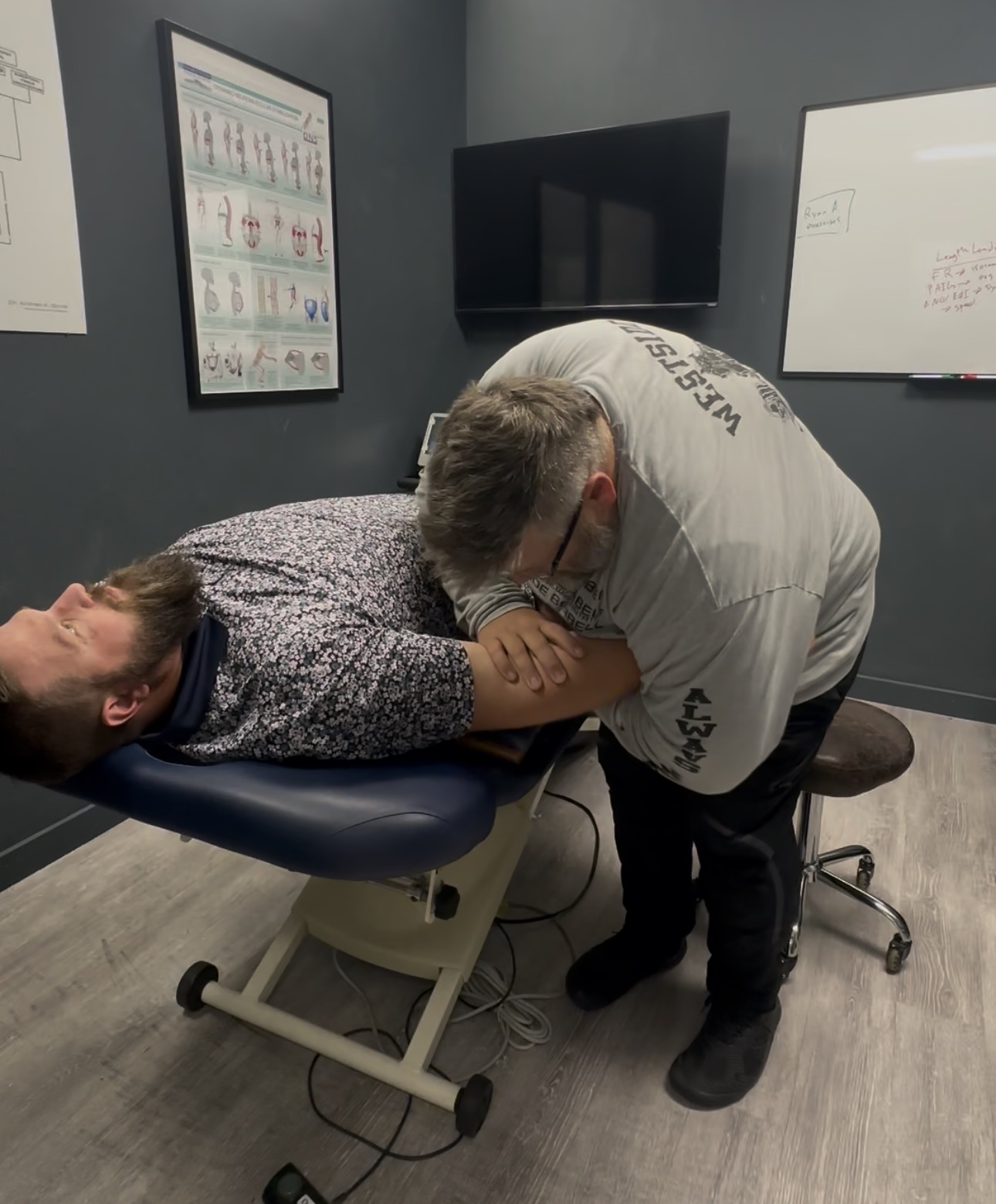
Lower the irritability without going into full rest, because full rest just leaves the tendon weaker for when you come back. We modify your training so you can keep lifting — straps, grip changes, bar swaps, and pulling back on the lifts that set it off.
Treatment may include joint mobilization and adjustments at the elbow, wrist, and neck, dry needling, shockwave therapy, soft tissue work, taping, and Class IV laser, alongside gentle isometric loading to start putting pain-guided load back through the tendon.
We also cover the basics of recovery nutrition — protein, collagen with vitamin C before your rehab sessions, and cutting back the foods that keep inflammation running high.
Phase 2
Rebuild capacity.
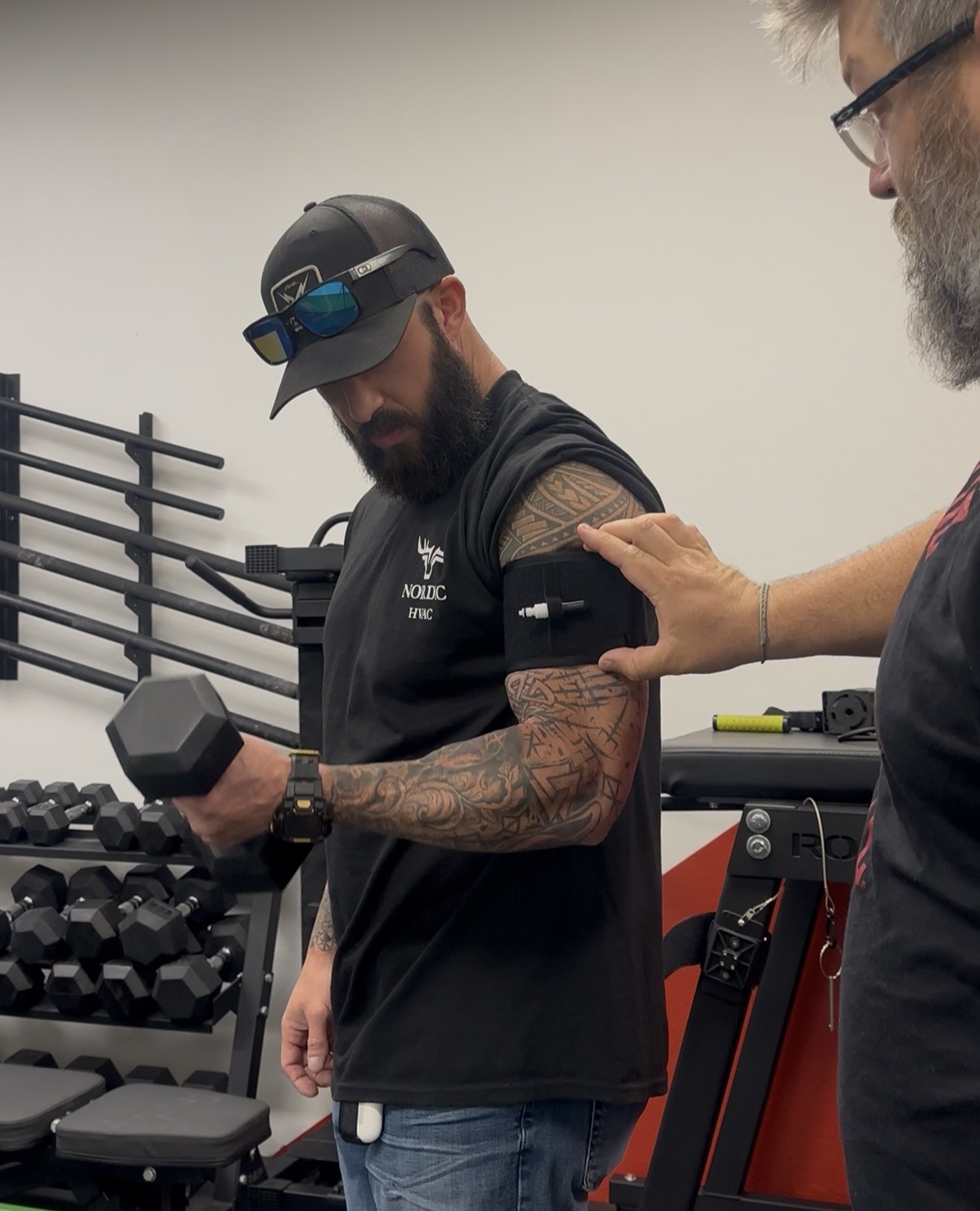
This is where the tendon actually gets stronger. Slow, controlled strength work for the forearm, grip, biceps, and triceps — eccentric and heavy-slow loading, forearm rotation, and end-range elbow and wrist strength — builds the tendon’s ability to handle load again.
We add shoulder and upper-back work so the elbow isn’t doing a job the rest of the arm should share. Shockwave therapy and blood flow restriction training come in here when they fit, because they work best alongside active rehab, not instead of it.
Phase 3
Bulletproof it.
Strength alone doesn’t get you back under the bar confidently. This phase brings back the lift or sport that caused the problem in a graded progression — technique work first, then building back up to your working weights and volume — before we clear you back into full training or competition.
You leave with a maintenance plan so it doesn’t come back the next time you ramp up for a meet.

One rule governs the whole process: how you feel during a session matters less than how your elbow feels the next morning. If it’s settled within 24 hours, we keep building. If it isn’t, we adjust.
Is this you?
Is this you?
- Pain on the outside or inside of your elbow when you grip, pull, curl, or press
- A sore elbow on the low-bar squat, pull-ups, or rows that used to go away and now doesn't
- Your grip feels weaker, or you've started using straps just to get through a session
- Everyday stuff — mugs, doorknobs, handshakes, carrying bags — has started to hurt
- You've rested it, iced it, or worn a brace, and the pain came right back when you started training again
Why ChiroMovement
- Care built specifically around strength and power athletes, not generic tennis elbow handouts
- A real diagnosis first — tendon, ligament, nerve, or neck — so you're treating the right problem
- Hands-on care, dry needling, Class IV laser, and shockwave on-site to support the strength-building phase, not replace it
- Measurable progress: grip strength and outcome scores tracked at every re-exam, so you know exactly where you stand
- One-on-one rehab that ends with a return to your lifts or sport, not just "the pain is gone"
Frequently asked questions
Is it tennis elbow if I don't play tennis?
Probably. "Tennis elbow" and "golfer's elbow" are just the old names. Most of the people we see with them are lifters, CrossFit athletes, and people who grip things for a living. What matters is which side of the elbow is involved and what's driving it.
Do I have to stop lifting?
Almost never entirely. Most athletes keep training with some changes — grip, straps, bar selection, and adjusted volume. The goal is finding what your elbow tolerates right now and building from there.
Should I get a cortisone shot?
Cortisone can quiet pain for a few weeks, but it doesn't fix why the tendon broke down. In one well-known study of people with tennis elbow, those who got a cortisone shot were less likely to be recovered at one year and much more likely to have their pain come back than those who got a placebo shot. We'd rather fix the capacity problem. If you're not improving after a solid run of care, we'll talk through other options with you, including referral.
Will a brace fix it?
A counterforce strap can take the edge off during training, but it's a tool for getting through sessions, not a treatment. Loading the tendon is what changes it.
How long does recovery take?
It depends on how long it's been going on and how your elbow responds to load. Many people see real change in 6 to 12 weeks. A tendon that's been angry for months can take longer. You'll have clear benchmarks at each stage, so it never feels open-ended.
Could it be coming from my neck?
Sometimes, yes. Neck and nerve irritation can cause or add to elbow and forearm pain. That's why we screen your neck and nerves as part of every elbow exam.
Ready to find out what's actually going on with your elbow?
Personalized care in West Jordan, Utah. No referral required.
Book Your Free Pain Assessment