
Disc Herniation Treatment in West Jordan, Utah
A herniated disc doesn't have to sideline you
Being told you have a “herniated disc” can feel like a verdict. Most people picture surgery, months on the couch, or never lifting a kid or a barbell the same way again. The reality is a lot more hopeful. Most disc herniations get better without surgery, and many physically shrink over time.
At ChiroMovement, we calm the irritated nerve, keep you moving, and rebuild your back’s capacity so it holds up to work, family, and training again.
When rest and waiting haven't fixed it
Most people with a disc injury have already been told to rest, take anti-inflammatories, and wait. Some have had a round of steroids or an injection. They get a few better days, then the leg pain comes back the first time they sit through a long drive, a work shift, or a training session.
That doesn’t mean you’re broken. It usually means nobody has given you a plan for what to do while the disc heals.
Disc herniations are most common between ages 30 and 50, and they show up in all kinds of people:
- Working adults with desk jobs or long commutes. Prolonged sitting raises pressure on the discs and often aggravates symptoms.
- Parents. Lifting kids, car seats, and laundry baskets, often bent and twisted, often tired.
- Trades, warehouse, and healthcare workers. Repeated lifting, bending, and patient handling.
- Drivers and equipment operators. Long hours of sitting plus vibration.
- Weekend warriors. Jumping back into yard work, sports, or the gym after time off.
- Strength athletes. Powerlifters, CrossFitters, strongman, and Highland Games competitors who load the spine heavily and often.
If the demand on your back has outpaced what it was ready to handle, a disc injury can be the result, whatever that demand looks like for you.
Lifters tend to get hurt from fewer, heavier reps. Throwers and racquet players get hurt from more, lighter ones. Either way, the tissue is being asked to do more than it’s currently built for, without enough recovery between sessions.
What is a Disc Herniation
Between each vertebra in your spine sits a disc. Think of it like a jelly donut: a tough outer ring with a gel-like center. Over time, small cracks can form in the outer ring. Repeated bending and lifting can push some of that gel out through a crack, toward the nerve that runs right next to it.
Most herniations happen at the bottom two levels of the low back (L4–5 and L5–S1). The nerves there run down the back of the leg, which is why disc pain so often travels into the buttock, leg, or foot. That leg pain is what people call sciatica.
Common signs
- Leg pain that’s often worse than the back pain
- Numbness, tingling, or pins and needles in the leg or foot
- Pain that’s worse with sitting, bending, coughing, or sneezing
- Relief lying down or walking short distances
- Weakness, like a foot that slaps when you walk or trouble rising onto your toes
Why does it hurt so much?
This is the part most people never get told.
A herniated disc doesn’t just pinch the nerve. The gel inside the disc has never been exposed to your immune system, so when it escapes, your body treats it like an invader. The result is intense inflammation right on the nerve, more like a chemical burn than a simple pinch.
That’s why:
- A small herniation can hurt more than a big one
- Pain can feel out of proportion to what’s on your MRI
- The nerve can stay sensitive and “touchy” even as things are improving
Here’s the good news: that same immune response is how your body cleans up the mess. Over weeks to months, cleanup cells move in and break down the herniated material. Research shows about two-thirds of herniations shrink on follow-up imaging. The larger ones that have pushed further out often shrink the most.
Your MRI isn't the whole story
Disc bulges and herniations are common in people with no pain at all. About 1 in 3 pain-free twenty-year-olds shows a disc bulge on MRI, and the number climbs with age. An MRI finding only matters if it matches your symptoms and your exam.
That's why we don't treat pictures. We treat people.
How we diagnose it at ChiroMovement
Disc herniations are diagnosed with a thorough history and exam. Most people don't need an MRI in the first 6 weeks.
During your assessment, we'll check:
- Where the pain travels. The pattern down your leg tells us which nerve and level is involved.
- Nerve tension tests. Straight leg raise and slump testing show how sensitive the nerve is.
- Strength, sensation, and reflexes. Calf raises, heel walking, toe and ankle strength, and reflexes show how well the nerve is working.
- Movement testing. We look for positions that ease your leg pain. When leg pain retreats toward the spine (called centralization), that's one of the best signs for recovery.
- What else it could be. Hip problems, spinal stenosis, SI joint pain, and nerve entrapments in the buttock can all mimic a disc. Each needs a different plan.
When we order imaging or refer out: if you're not improving after 6–8 weeks, if weakness is getting worse, or if an injection or surgical consult is on the table.
Get emergency care right away if you have
- Numbness in the groin, inner thighs, or "saddle" area
- New trouble urinating, or loss of bladder or bowel control
- Leg weakness that is quickly getting worse
These can be signs of cauda equina syndrome, a surgical emergency. Go to the ER. Don't wait for an appointment.
Treatment: Calm It, Then Build It
Phase 1
Calm the nerve
Understand why it hurts. Find the positions that ease it. Keep moving.
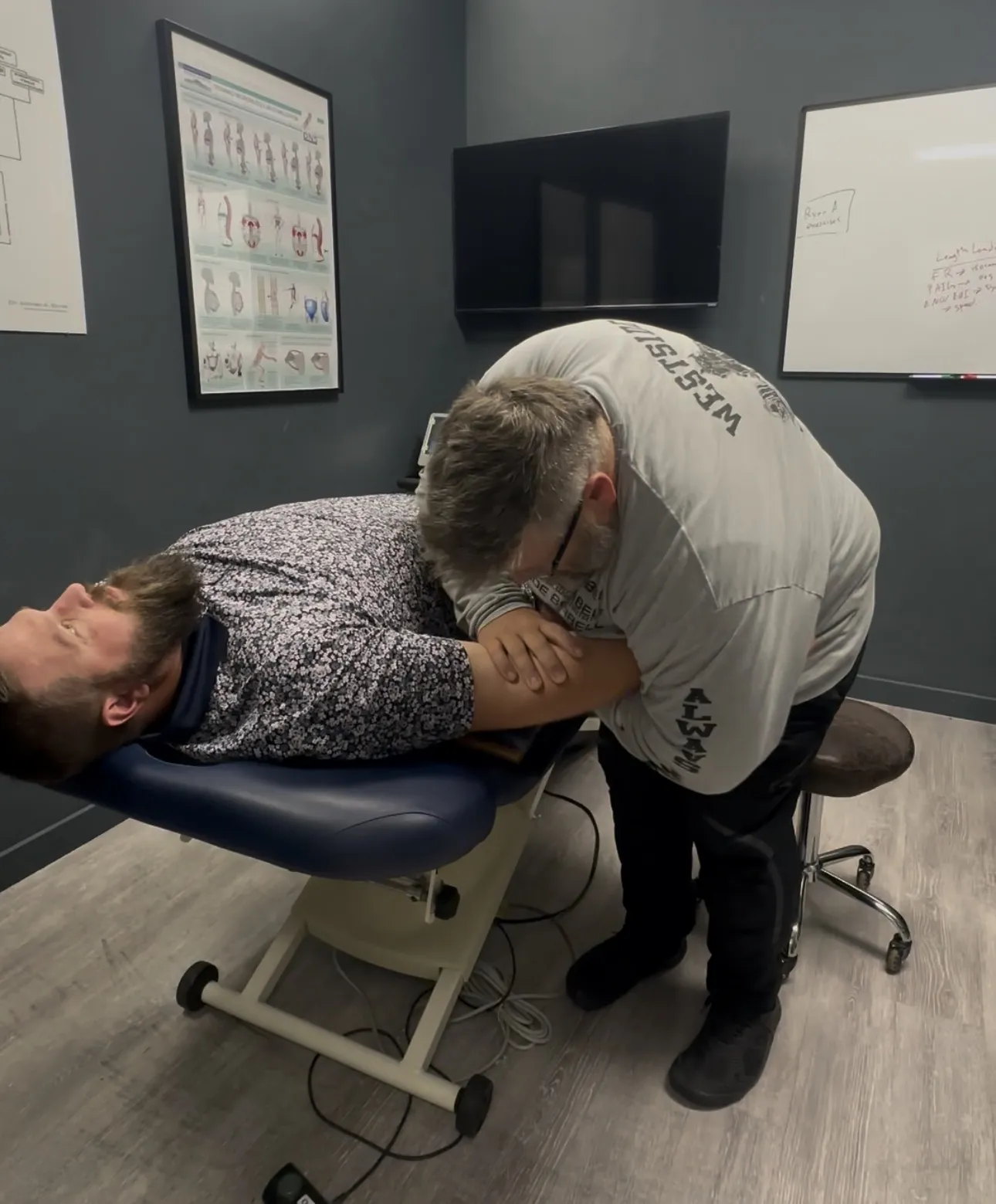
- Comprehensive assessment and a clear explanation of what’s going on
- Finding your directional preference, the movements that pull leg pain back toward the spine
- Hands-on care as needed: spinal manipulation, myofascial release, gentle nerve gliding
- Walking in short, frequent bouts and breaking up long periods of sitting
- A plan for sleep, work, and daily life so you’re not guessing
Phase 2
Restore movement
Reduce leg pain. Rebuild trunk endurance. Restore confidence moving.
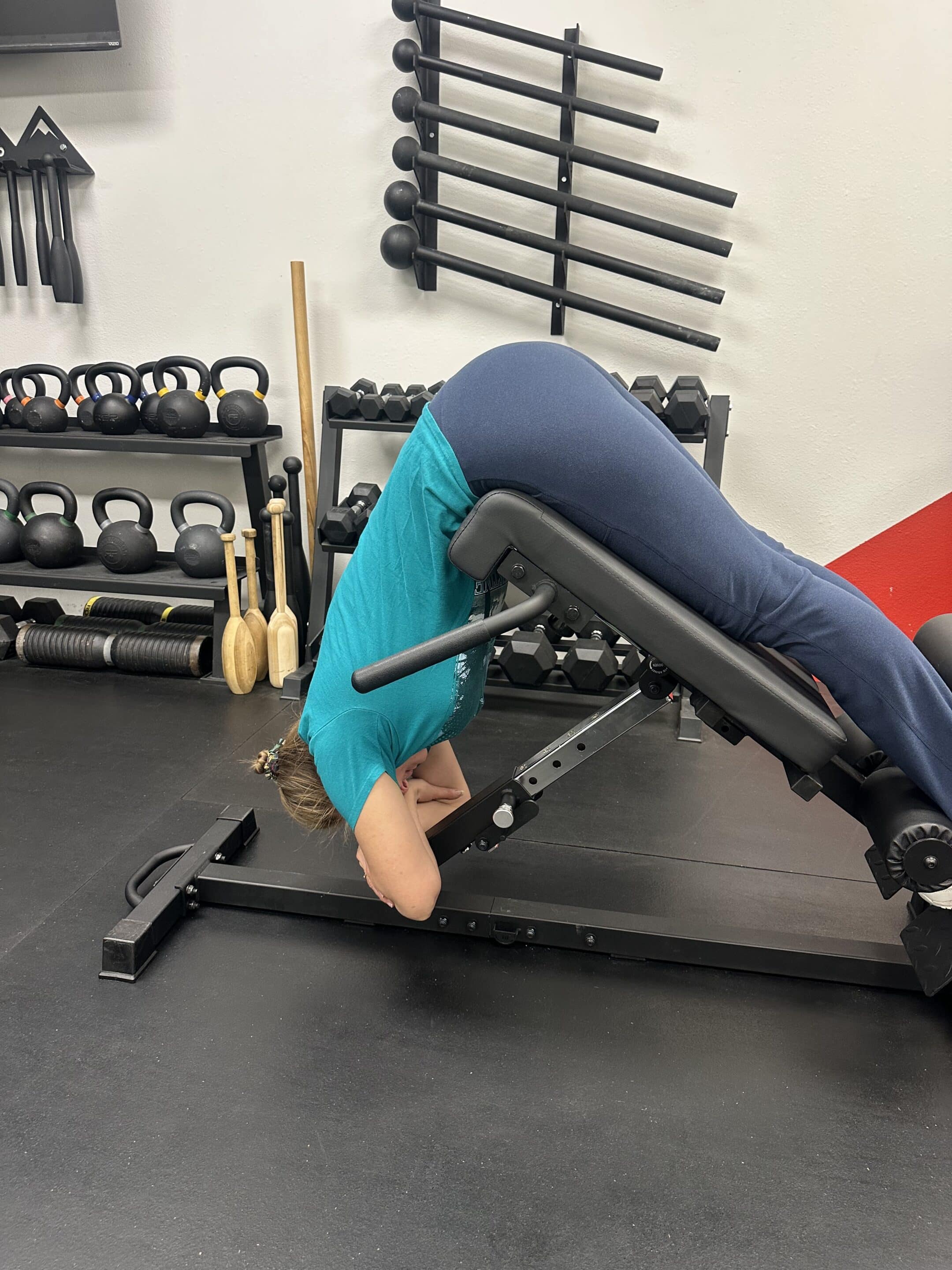
- Trunk endurance work (modified curl-up, side plank, bird dog)
- Hip hinge retraining with light load
- Glute and hip strength
- Progressing nerve mobility as sensitivity drops
- Tracking leg strength (calf raises, heel walks) as the nerve recovers
Phase 3
Build and return to load
Progressively load your back. Return to work, training, and sport.
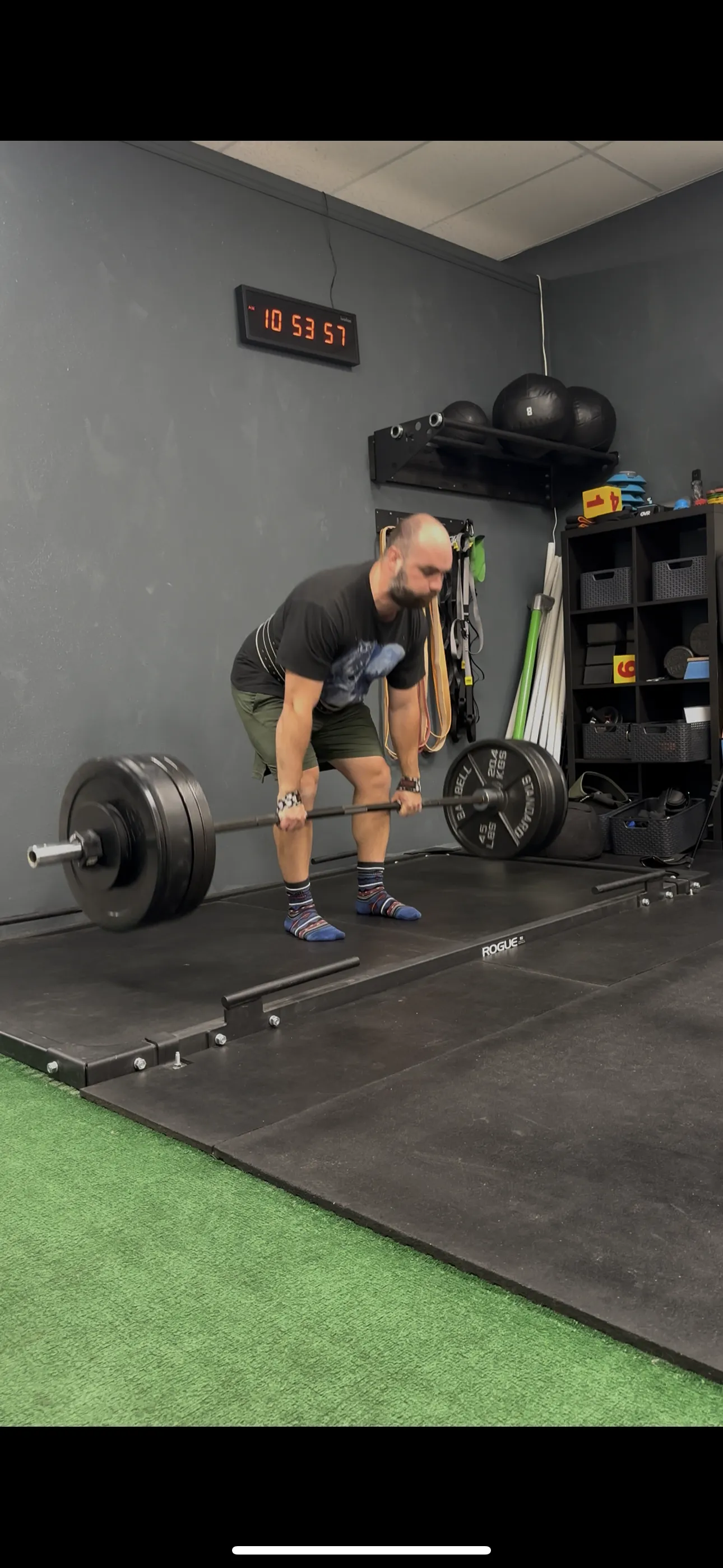
- Loaded hinge and squat patterns: kettlebell or trap bar deadlifts, goblet squats, split squats
- Carries and anti-rotation work
- Breathing and bracing mechanics under load
- For lifters: a staged return to barbell squats, then pulls from the floor, then competition loads. Heavy pulling stays out of the first hour or two after waking, when discs are most vulnerable.
- Hands-on care tapers as your loading tolerance improves
Long term
Stay strong. Keep it from coming back.
- Trunk and hip strength built into your normal routine
- Awareness of early warning signs: long sitting stretches, big jumps in training volume, heavy lifting when fatigued
- A plan for flare-ups, so a bad day doesn't turn into a bad month
What about medication, injections, or surgery?
We’re honest about every option, including the ones we don’t provide.
- Medications. Anti-inflammatories can help in the short term. Many commonly prescribed nerve-pain medications have performed no better than placebo for sciatica in research trials.
- Epidural steroid injections. These can calm severe leg pain for weeks to a few months. They can be a useful bridge when pain is blocking rehab, but they don’t change long-term outcomes for most people.
- Surgery. Surgery is the right call for emergencies and worsening weakness. For everyone else, it speeds up relief but doesn’t change where most people end up at one to two years. If you’ve done quality conservative care for 6–12 weeks and leg pain is still disabling, we’ll help you get a surgical opinion.
We work alongside your primary care provider and specialists when that’s what you need.
Recovery outside the clinic
What you do between visits matters:
- Stop smoking or vaping nicotine. Nicotine cuts off the blood supply that discs depend on and slows healing.
- Eat enough protein to protect your muscle while training is reduced.
- Prioritize sleep. Poor sleep turns up pain sensitivity.
- Get your vitamin D checked, especially in Utah winters. Low levels are linked to worse back pain.
Why ChiroMovement
We don't hand you a pamphlet and tell you to stop lifting.
- One-on-one appointments
- A thorough exam that tells you which nerve is involved and what's driving your pain
- Individualized plans, not a one-size-fits-all protocol
- Progressive rehab that rebuilds your back's capacity, not just quiets pain for a few days
- Straight answers on when imaging, injections, or a surgical opinion makes sense
- Experience treating everyone from parents and desk workers to competitive lifters
Frequently asked questions
Will a herniated disc heal on its own?
Often, yes. Around 85–90% of people with disc-related leg pain improve significantly within 6–12 weeks, and many herniations shrink over time. A structured plan helps you recover faster and lowers the chance of it coming back.
Do I need an MRI?
Not usually at first. An MRI makes sense if symptoms aren't improving after 6–8 weeks, if weakness is getting worse, or if an injection or surgery is being considered.
Is chiropractic care safe for a herniated disc?
For most people, yes. Research supports spinal manipulation as a reasonable part of conservative care for disc-related leg pain. We screen carefully before every treatment and choose techniques based on your exam and what you tolerate.
Do I need surgery?
Rarely. Surgery is needed for emergencies and progressive weakness. For most people, conservative care and surgery reach similar results at one to two years.
Can I keep lifting or working out?
Usually, with changes. Most people do better staying active than resting. We'll show you what to keep, what to modify, and what to pause, then build you back up.
How long until I feel better?
Many people notice clear improvement within 2–6 weeks. Returning to heavy training or physically demanding work usually takes 3–6 months. Numbness can take longer to fully clear than pain, and that's normal.