
Heel pain shouldn't run your morning
Plantar fasciitis is one of the most common — and most misunderstood — sources of foot pain we see. Most people have already tried stretching, new shoes, or just waiting it out. At ChiroMovement, we combine hands-on care and shockwave therapy with a progressive rehab plan built around what your foot needs to actually tolerate load again.
When stretching alone hasn't fixed it
Most of the people we see with plantar fasciitis have already tried stretching, arch supports, new shoes, or rest. They may get a few good days, but the pain comes back the moment they’re back on their feet for work, training, or life.
That’s not a failure on their part — it’s usually a sign the problem was never just tight tissue. It’s a capacity problem.
Who gets it
Plantar fasciitis doesn’t just show up in athletes — it’s one of the most common foot complaints we see across all kinds of people:
- Parents and working adults — long shifts on hard floors, chasing kids around, sudden increases in time on their feet
- Teachers, nurses, retail and service workers — jobs that keep you standing or walking most of the day
- Runners and walkers — mileage increases, surface changes, worn-out shoes
- Weekend warriors and everyday exercisers — jumping back into activity after time off, or ramping up too fast
- Strength athletes — powerlifters, CrossFitters, and Highland Games competitors dealing with heavy standing and bracing loads
- Anyone who’s had a recent weight or activity change — new job, new routine, new shoes, or simply more time on their feet than usual
If your foot’s demands have outpaced what it’s currently able to handle, plantar fasciitis is often the result — no matter what that demand looks like for you.

standing worker

runners

teachers
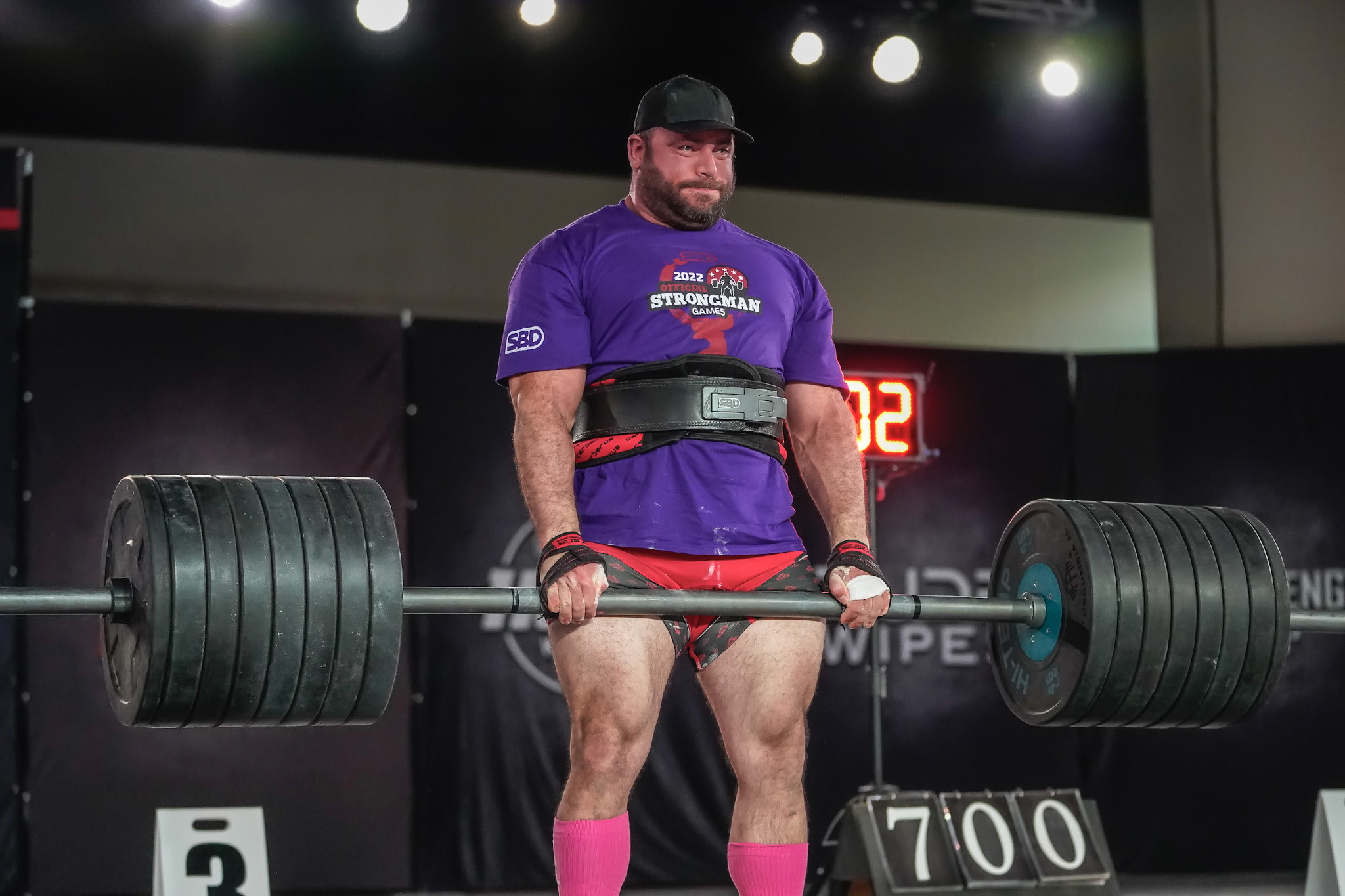
athlete
Plantar fasciitis is pain at the bottom of the foot, most often felt at the heel and sometimes radiating toward the toes. It’s caused by strain at the origin of the plantar fascia — the connective tissue that supports your arch and connects your heel bone to your toes.
The classic sign: sharp, stabbing pain with your first steps in the morning or after sitting for a while, which eases after a few minutes of walking — then often returns after a long day on your feet.
It’s not caused by one single thing. Foot structure, calf tightness, training or work volume, footwear, and body weight can all play a role. What we see most often clinically: the foot simply hasn’t been asked to build the capacity it needs for the demands being placed on it.
Why hasn’t the pain gone away?
This is the part most people never get told.
Plantar fasciitis that’s stuck around for more than a few months usually isn’t a simple inflammation problem anymore. The tissue has started to change — the same way a chronically overloaded tendon does — and it needs a different approach than rest and ice.
That’s why:
- Stretching it continually isn’t fixing it on its own
- Cortisone shots may quiet it short-term, but the relief doesn’t last and repeated injections carry real risk
- A generic arch support doesn’t address why the tissue hasn’t been able to keep up
- Surgery is rarely the right first answer — it’s a last resort, not a fix for the average case
Recovery requires two things: an environment that supports the tissue calming down, and a progressive plan that rebuilds its capacity to handle real life again.
How we diagnose it at ChiroMovement
Plantar fasciitis is diagnosed clinically — most cases don’t need imaging.
During your assessment, we’ll check:
- Where exactly the pain is (point tenderness at the heel where the fascia attaches)
- The windlass test — tensioning the fascia by extending the big toe to reproduce your pain
- Ankle and calf mobility — tightness here is one of the most common and most fixable contributors
- Your gait and how your foot moves during walking or running
- Whether something other than the fascia is actually driving the pain — fat pad bruising, a nerve entrapment, a stress fracture, or even a nerve issue coming from the lower back can all mimic plantar fasciitis, and each needs a different treatment approach
Getting the diagnosis right the first time is what keeps people from spending months treating the wrong thing.
Treatment: Abolish, Then Maintain
Phase 1 of care.
Understand why your foot hurts. Begin calming the irritated tissue. Build your plan.
- Comprehensive foot and ankle assessment
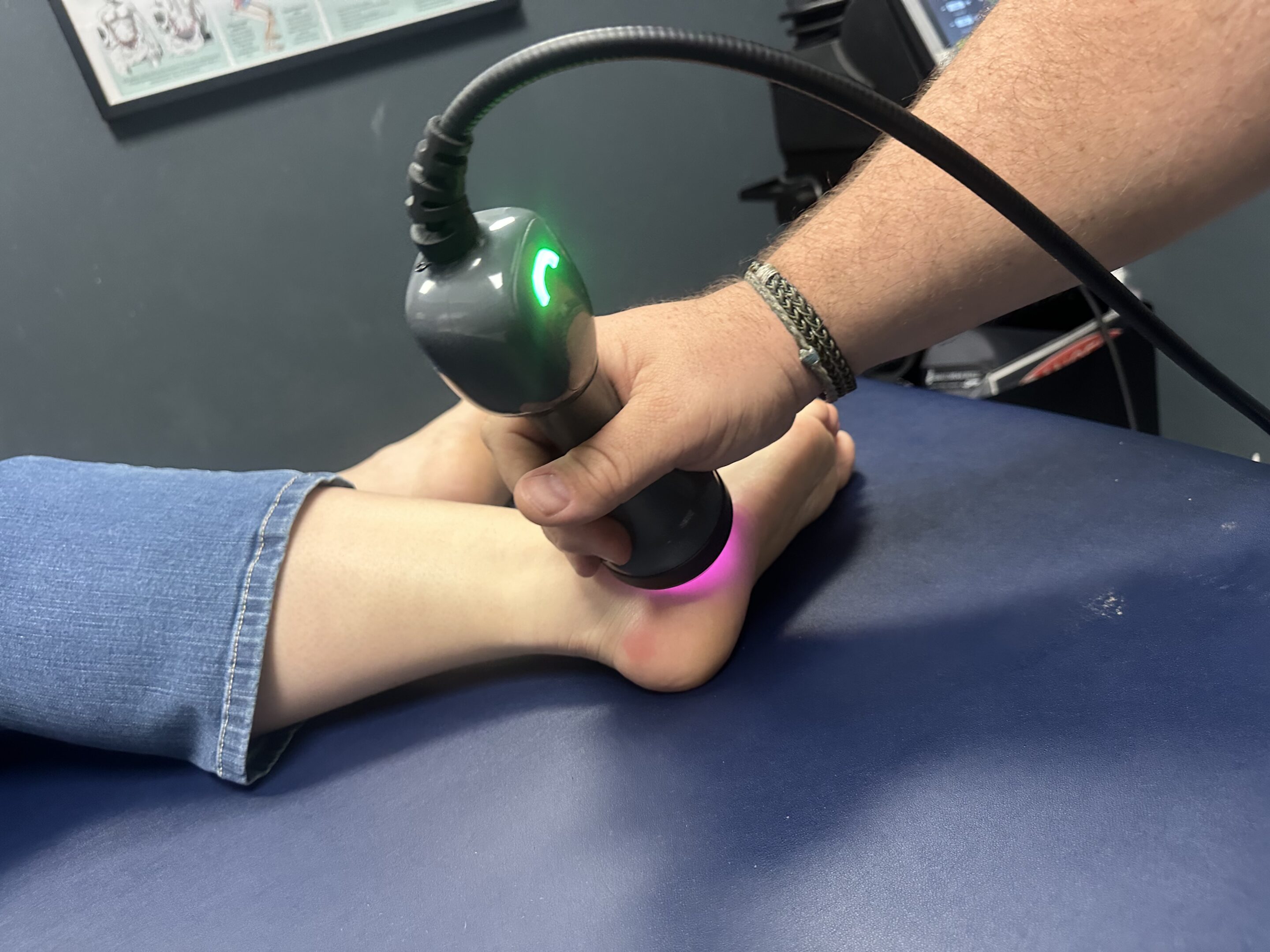
- Hands-on care as needed: myofascial release, dry needling, cupping, deep tissue laser
- Begin fascia-specific stretching and calf mobility work
- Shockwave therapy (Precision Pulse FX) considered early for higher-irritability or longer-standing cases
Phase 2
Rebuild capacity. Reduce pain. Restore confidence in your foot.
- Progress from stretching into loaded calf work (eccentric/isometric heel raises)
- Intrinsic foot strengthening — short foot drills, toe control, foot rooting
- Continue shockwave and hands-on care as appropriate
- Reintroduce pain-free walking and standing volume

Phase 3 — Build and Support
Progressively increase capacity. Return to training. Return to your sport.
- Graded return to running, lifting, standing-heavy training, or your specific sport demands
- Continued ankle mobility work to prevent recurrence and support movement patterns like the squat
- Taper hands-on care as active loading tolerance improves

Long term
Stay active. Prevent it from coming back.
- Ongoing calf and foot strength built into normal training
- Awareness of load changes — new shoes, mileage jumps, big shifts in standing time — as early warning signs

Is this you?
✓ Sharp heel pain with your first steps in the morning ✓ Pain that eases after a few minutes, then returns later in the day ✓ Pain that’s worse going up stairs or up on your toes ✓ You’ve tried stretching or new shoes without lasting relief ✓ You’ve been told to “just rest it” and it hasn’t worked ✓ You want to get back to training, running, or standing without watching the clock on your pain
If several of these sound familiar, we’d love to help.
Why ChiroMovement
We don’t hand you a generic stretching sheet and send you on your way.
✔ One-on-one appointments ✔ Individualized treatment plans, not a one-size-fits-all protocol ✔ Shockwave therapy (Precision Pulse FX) backed by strong evidence for plantar fasciitis specifically ✔ Progressive rehab that rebuilds capacity — not just quiets pain for a few days ✔ Experience treating everyone from first-time sufferers on their feet all day to competitive athletes who need their feet to hold up under real load
FAQ
Will plantar fasciitis go away on its own? Sometimes, but it can also linger for months or become chronic if the underlying capacity issue isn’t addressed. Most people improve significantly within 6–12 months with the right conservative care — often much sooner with a structured plan.
Do I need a cortisone shot? Not usually as a first step. Shots can offer short-term relief but don’t address why the tissue is struggling, and repeated injections carry risk of further tissue damage.
Do I need surgery? Rarely. Surgery is reserved for true refractory cases after extended conservative care hasn’t worked — it’s not a starting point.
How long until I feel better? Many people notice real change within 6–8 weeks of a proper program. Cases that have been going on for 6+ months take longer and need a more structured loading approach, but conservative care still works for the large majority of people.