
Knee Pain Treatment in West Jordan, Utah
Get back to squatting, running, and taking the stairs without pain.
Knee pain that's holding back your training
Maybe it's pain just below the kneecap every time you squat or jump, an ache around the kneecap on the stairs, or pain on the outside of the knee a few miles into a run. Maybe it started after a jump in volume, a new program, or a single awkward landing.
At ChiroMovement, we help lifters, CrossFit athletes, strongman and Highland Games competitors, runners, and active adults figure out what is actually driving their knee pain. Then we build a plan that calms it down and gets the knee strong enough to handle squats, lunges, running, and everyday life again.
Book Your AssessmentPersonalized care in West Jordan, Utah, serving South Jordan, Riverton, Herriman, Taylorsville, and the Salt Lake Valley. No referral required.
When rest and knee sleeves haven't fixed it
Knee pain is worth a closer look if:
- You feel pain just below the kneecap when you squat, jump, or land
- The front of your knee aches on the stairs, after sitting a long time, or at the bottom of a squat
- The outside of your knee hurts a few miles into a run or a ride
- Your knee clicks, catches, swells, or feels like it might give way
- Lunges, split squats, step-downs, or deep squats bring the pain on
- It calms down with rest, then comes right back when you start training again
- Stretching, foam rolling, or a knee sleeve helped a little, but didn't fix it
If several of these sound familiar, the next step is finding out which structure is irritated, and whether the hip or ankle is part of the problem.
Common knee conditions we treat
Knee pain has a lot of possible sources. These are the ones we see most often in active adults and strength athletes.
Patellar tendinopathy (jumper's knee)
Pain just below the kneecap that flares with squats, jumps, and landings. One of the most common knee problems in lifters and athletes.
Read more →Patellofemoral pain
An ache around or behind the kneecap with stairs, squatting, or sitting with your knees bent. Usually a load and control problem, not damage.
Quadriceps tendon pain
Pain just above the kneecap with heavy squats, deep knee bends, or explosive work. One of the conditions where focused shockwave can help.
Shockwave therapy →IT band pain
Pain on the outside of the knee that builds a few miles into a run or ride, often tied to training volume and hip control.
Meniscus irritation
Pain along the joint line, sometimes with clicking, catching, or swelling. Many meniscus injuries improve with a progressive rehab plan.
Read more →Knee osteoarthritis
Stiffness and aching, especially in the morning or after sitting. Strength training is one of the best tools for keeping you active and comfortable.
Why exercise helps →Knee pain with squats
Pain at the bottom of a squat or out of the hole. Often fixed by adjusting depth, stance, tempo, and load while the knee gets stronger.
Squat clinic recap →Ligament sprains & post-surgery rehab
MCL and other ligament sprains, and rebuilding strength after knee surgery once your surgeon has cleared you for rehab.
Inner knee pain
Pain on the inside of the knee from irritated tendons or tissue where the hamstrings and inner thigh muscles attach.
Not sure which one fits? That's what the assessment is for, or browse all the conditions we treat. Knee pain can also come from the hip, so we screen for that too. If your hip is part of the picture, see how we treat hip pain.
Why hasn't the knee pain gone away?
Most training-related knee pain isn't a sign that something is broken. It's a sign that the demand on the knee has gotten ahead of what the tendons, muscles, and joint can currently handle.
That can happen when volume or intensity jumps, you add more running or jumping, your squat depth or stance changes, or recovery falls behind. The knee also takes the blame for what the hip and ankle are doing: if they can't control or share the load, the knee often ends up taking more than its share.
Rest and a knee sleeve can make it feel better for a while, but they don't build capacity. That's why the pain comes back as soon as training ramps up. Lasting change usually takes two things:
- Calming the irritated tissue enough that you can load it without a flare
- A progressive plan that rebuilds strength in the knee, hip, and calf until they can handle your training again
How we figure out what's going on
Your first visit is a full assessment, not a quick adjustment. We look at:
- Your history: when it started, what you were training, and which movements hurt
- Range of motion at the knee, hip, and ankle
- How you squat, lunge, step down, and land on one leg
- Strength testing of the quads, hamstrings, glutes, and calves, side to side
- Ligament, meniscus, and tendon tests to narrow down which structure is irritated
- A hip and low back screen to rule out referred pain
- The lifts and activities that matter to you, so the plan fits your training
You'll leave knowing what we think is going on, what to modify in training right now, and what the plan looks like from here. If anything in the exam points to something that needs imaging or a medical referral, we'll tell you and help you get it.
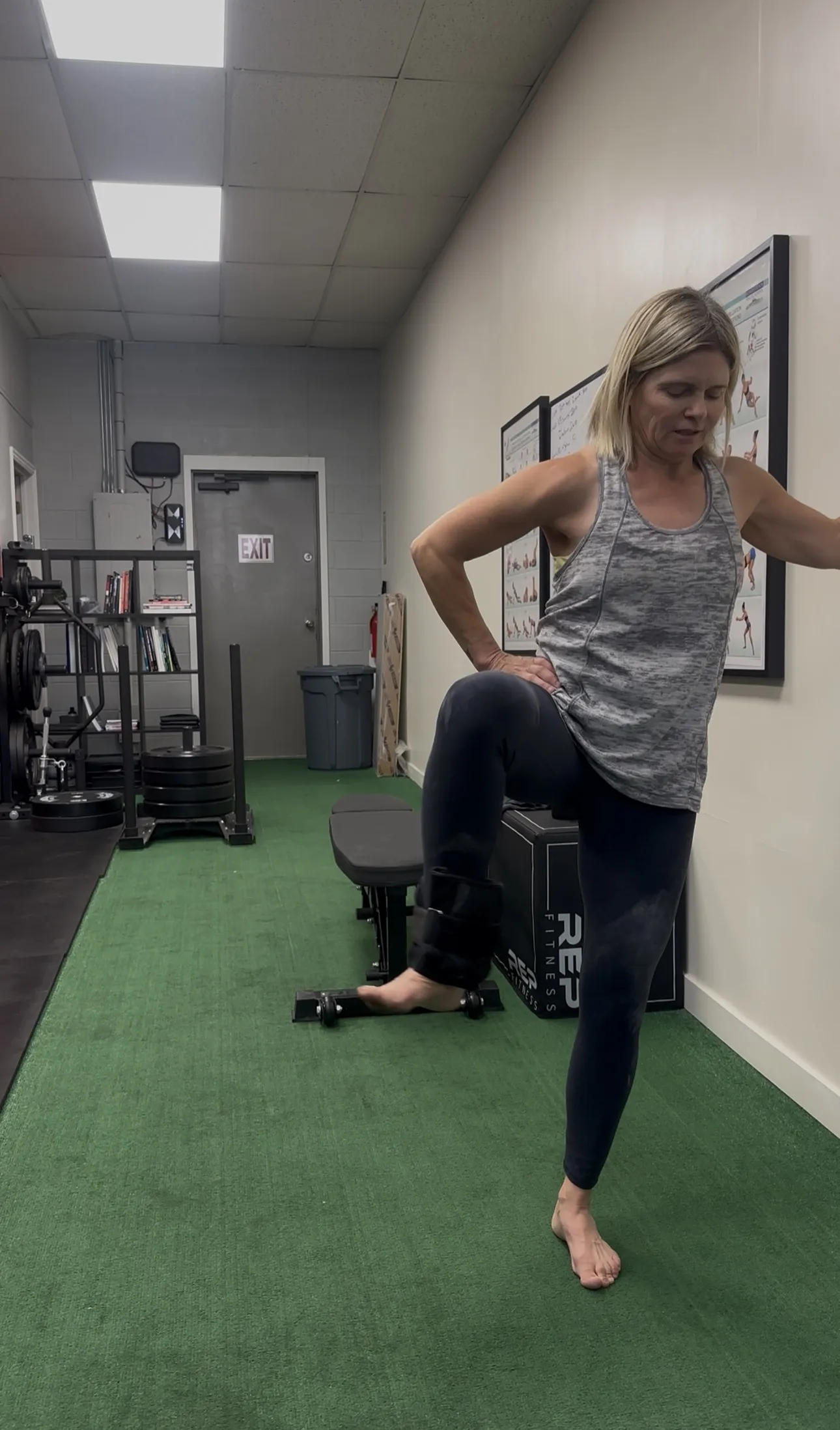
How we treat knee pain
Every plan is built around your assessment, but most follow the same general path: calm it down, build it back up, and get you back to full training.
Phase 1 — Calm it down
Goal: reduce pain and find what you can train right now.
- Training modifications, not total rest: adjusting depth, stance, tempo, box height, and exercise selection so you can keep lifting
- Isometric holds like wall sits and Spanish squats, which can ease tendon pain and keep the knee working
- Hands-on care such as myofascial release and joint mobilization for the knee, hip, and ankle when it helps
- Dry needling for stubborn trigger points in the quads, hamstrings, and calves
- Focused shockwave therapy for patellar and quadriceps tendinopathy
- Class IV laser therapy to help settle pain and irritation
Phase 2 — Rebuild capacity
Goal: make the knee stronger than it was before it got hurt.
- Progressive quad, hamstring, glute, and calf strengthening through our functional rehab and strength training approach
- Blood flow restriction (BFR) training to build quad strength with lighter loads while the knee is still sensitive or recovering from surgery
- Restoring knee, hip, and ankle mobility with Functional Range Conditioning (FRC) work
- Single-leg strength and control for squatting, running, and stairs
- Home program built around the equipment you actually have
Phase 3 — Return to training
Goal: get back to your full program, including the lifts and sports that used to hurt.
- Reintroducing deep squats, lunges, running, and jumping with a clear progression
- Technique and setup changes, like stance, depth, and bar position, when they make a real difference
- Load management guidance for your training cycle, running mileage, or competition prep
Long term — Keep it that way
Once you're back to full training, we give you a short maintenance routine to keep your knees resilient, and a plan for what to do if they ever start talking to you again.
When to see a doctor first
- You felt a pop, the knee swelled up quickly, and it feels unstable or you can't put weight on it
- The knee is locked and you can't fully straighten it
- A hot, red, swollen knee, especially with a fever
- Sudden calf swelling, warmth, and pain
- A child or teen with a limp and knee pain, which can come from the hip
Why lifters choose ChiroMovement for knee pain
We understand squats and training
We work with powerlifters, CrossFit athletes, strongman and Highland Games competitors every week. We know the difference between a knee that needs a break and one that needs a smarter program.
One-on-one care
You work directly with Dr. Steven Bird for the full visit, not a rotation of assistants.
Strength-first, not passive-only
Hands-on care and technology like shockwave and laser help settle pain. Progressive loading is what makes the change last.
A plan you can follow
You'll know what we're working on, why, and what progress looks like at each step.
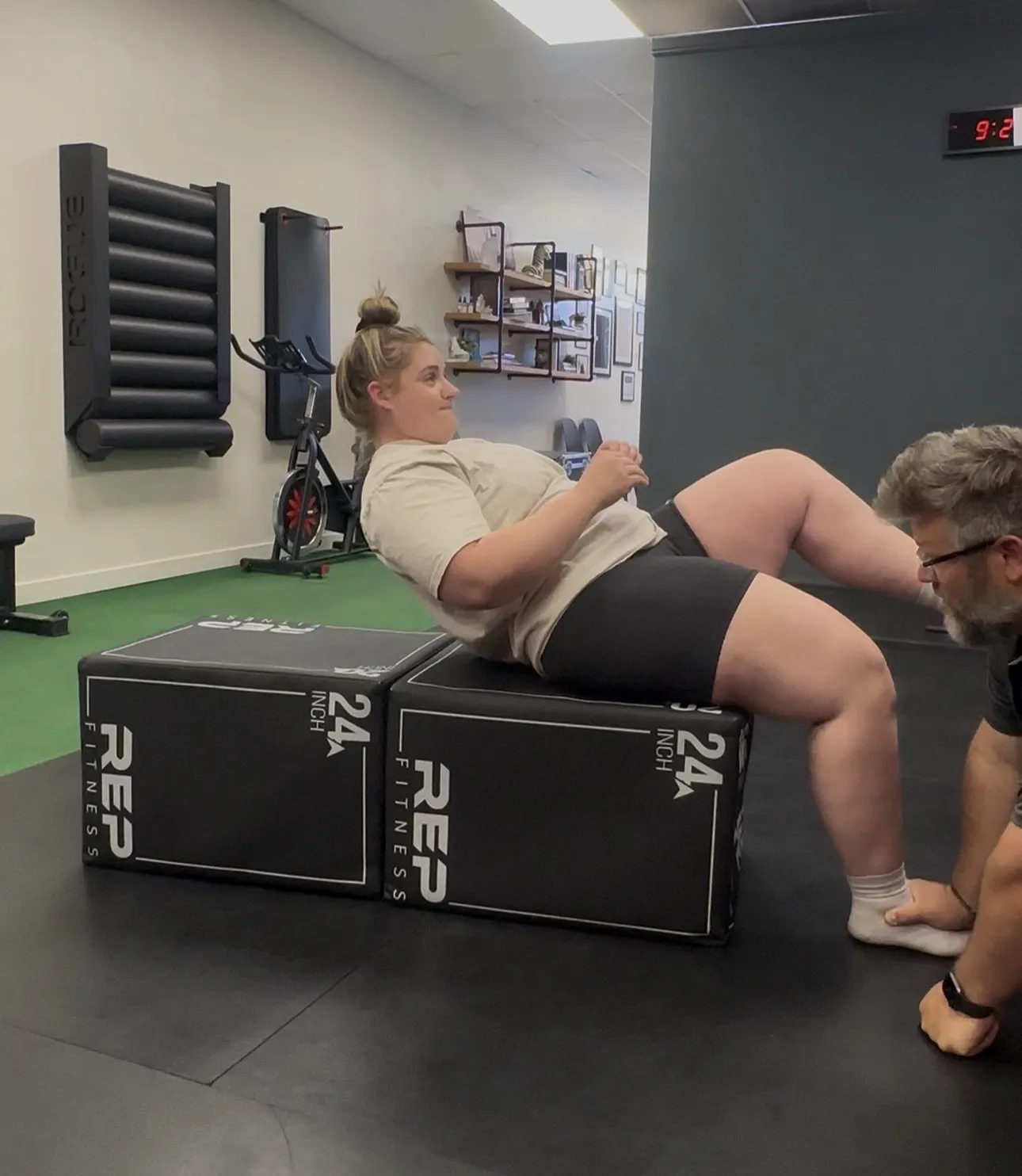
Frequently Asked Questions
Should I stop squatting if my knee hurts?
Usually not completely. Most knee pain does better with modified training than with total rest. We'll show you how to adjust depth, stance, tempo, box height, or load so you can keep squatting while the knee recovers.
Is it bad for my knees to squat deep?
For most people, no. Deep squats aren't inherently bad for healthy knees, and the knee adapts to the loads you train it with. If deep squats hurt right now, we'll find a range you can tolerate and build back toward full depth as the knee gets stronger.
Do I need an MRI for knee pain?
Most people don't need imaging to start care. A thorough exam tells us a lot, and findings like meniscus wear and cartilage changes are common in people without pain. If your exam suggests a significant tear, instability, or something that needs imaging, we'll recommend it and help you get it.
Can you help with a meniscus tear?
Many meniscus tears, especially wear-related ones, respond well to a structured rehab plan. If your knee locks, keeps giving way, or your exam suggests you need a surgical consultation, we'll tell you and help coordinate it.
Will a knee sleeve or brace fix it?
A sleeve or brace can make the knee feel more comfortable during training, but it doesn't change the tissue. Building strength and capacity in the knee, hip, and calf is what fixes the problem long term.
Can my knee pain be coming from my hip?
It can. Hip problems can refer pain into the knee, and weak or poorly controlled hips can put extra load through the knee. That's why every knee assessment at ChiroMovement includes a hip screen.
How long does it take for knee pain to get better?
It depends on the condition, how long it has been going on, and what you need to return to. Many people feel a meaningful change in the first few weeks, while tendon problems often take a few months of progressive loading to fully resolve. We'll give you a realistic timeline after your assessment.
Do I need a referral?
No referral is required to schedule an assessment at ChiroMovement.
Your knees can handle more than they do right now
Let's find out what's driving the pain and build the plan that gets you back under the bar.
Book Your Assessment